
Pink butterfly orchid
Anacamptis papilionacea
Description
Growing requirements
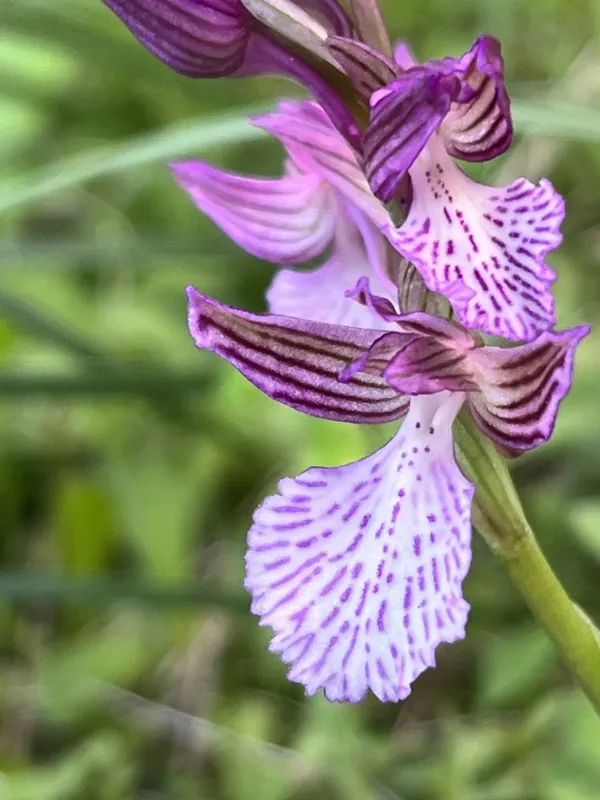
The pink butterfly orchid (Anacamptis papilionacea) belongs to the Orchidaceae family. It is a perennial herbaceous plant native to the Mediterranean region, typically found in dry meadows and scrubland habitats.
Botanically, the species is distinguished by its two ovoid tubers, which serve as nutrient storage organs. The stem rises to a height of 15 to 40 cm, topped with a dense inflorescence of vibrant, butterfly-shaped flowers ranging from pink to deep purple.
For successful cultivation, the plant requires well-drained, calcareous soil. It thrives in neutral to slightly alkaline substrates and cannot tolerate waterlogged conditions, which lead to rapid root rot.
The plant prefers full sun to light partial shade. It is well-adapted to the Mediterranean climate, characterized by dry, warm summers and mild, moist winters, reflecting its natural dormancy cycles.
A critical aspect of its biology is the dependency on mycorrhizal fungi for seed germination and nutrient uptake. This symbiotic relationship makes propagation in controlled environments technically challenging for non-specialized growers.
Main diseases and pests
Fungal infections, particularly root and tuber rot, are the most common threats caused by poor drainage or excessive humidity levels during the plant's resting phase.
Slugs and snails are major pests that target new shoots and foliage. Gardeners should employ manual collection or organic deterrents to protect the developing plants throughout the spring season.
Aphids can infest the inflorescences, causing flower distortion. Regular monitoring is advised, and infestations should be managed with insecticidal soaps or biological control agents if necessary.
Viral infections can manifest as mottled leaves or stunted growth. Since there is no cure, diseased plants must be isolated or destroyed to prevent transmission to healthy specimens.
Nutrient deficiency, specifically if the soil is too acidic, can weaken the plant's immunity. Maintaining proper soil pH and nutrient balance is essential for the long-term health of the colony.