
Loose-flowered orchid
Anacamptis palustris
Description
Growing requirements
The loose-flowered orchid (Anacamptis palustris) is a perennial herbaceous plant belonging to the Orchidaceae family. It is predominantly distributed throughout European wetlands, the Mediterranean region, and parts of Western Asia.
This species is a typical hydrophyte, thriving in environments with permanently high soil moisture, such as fens, marshes, and damp meadows. It cannot withstand long periods of drought, which are fatal to its root tubers.
The plant requires soils that are rich in carbonates and maintain a neutral or slightly alkaline pH. The presence of specific soil fungi, with which the orchid forms a symbiotic relationship, is essential for the healthy development of its seeds and tubers.
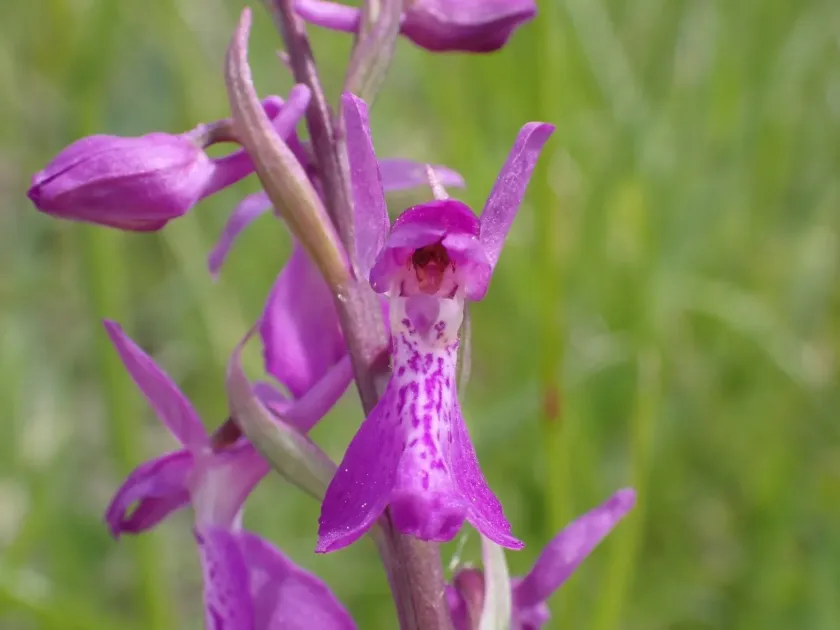
Botanically, it is distinguished by two ovoid tubers and a slender, upright stem that can reach heights of 60 centimeters. Its inflorescence is a loose spike containing numerous vibrant purple or pink flowers blooming in late spring.
In terms of agricultural relevance, this plant is not a commercial crop due to its endangered status and specialized requirements. It is primarily managed under conservation programs to protect biodiversity and restore wetland ecosystems.
Main diseases and pests
The primary threat to the loose-flowered orchid is the drainage of wetlands for agricultural expansion. Any lowering of the water table quickly leads to the drying of the soil and the loss of the orchid population.
Eutrophication caused by nutrient runoff from nearby farmland poses a major danger. The increase in nitrogen levels promotes the growth of aggressive tall grasses that shade out the orchids and alter the soil microflora.
Fungal pathogens represent a significant risk, especially during stagnant water conditions or temperature fluctuations. These diseases target the tuber system, often resulting in systemic decay and loss of the individual plant.
Invertebrate pests, including aphids and thrips, frequently infest the flowering spikes, reducing the overall seed output. Furthermore, grazing animals may inadvertently trample or consume the succulent leaves before the seeds ripen.
Climate change poses a long-term risk by shifting precipitation patterns and causing seasonal droughts. This instability prevents the plant from completing its life cycle and disrupts the ecological balance of its native habitats.