
Bug orchid
Anacamptis coriophora
Description
Growing requirements
The Bug orchid (Anacamptis coriophora) is a perennial herbaceous plant belonging to the Orchidaceae family. It is widely distributed across parts of Europe, the Mediterranean region, and Western Asia, thriving in diverse geographical landscapes.
This species typically inhabits damp meadows, calcareous grasslands, and occasionally open forest clearings. It requires substrates that are rich in nutrients, favoring neutral to alkaline soil conditions to sustain its complex physiological needs.
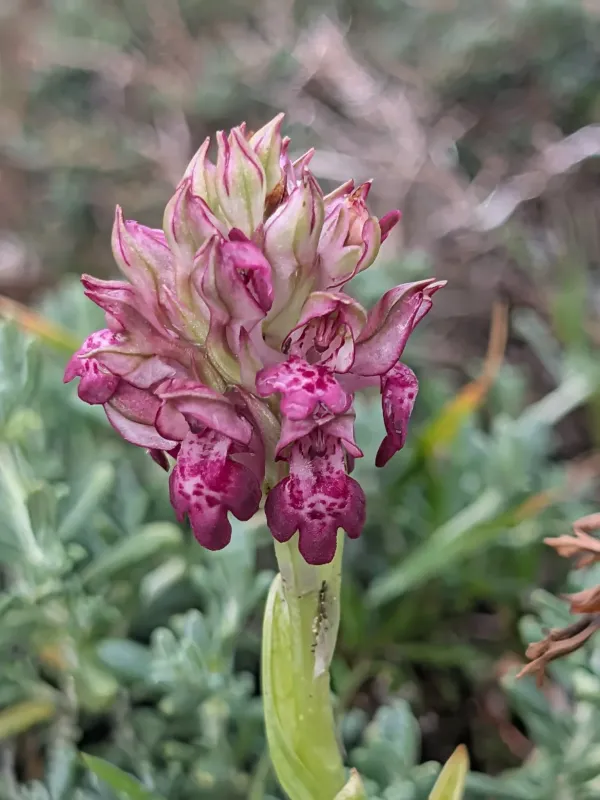
Botanically, the plant is characterized by its pair of spherical tubers that store energy for growth. The dense, spike-shaped inflorescence bears numerous small flowers with a distinct scent, which gives the plant its common name and serves to attract specific pollinators.
A fundamental requirement for the lifecycle of the Bug orchid is the presence of symbiotic mycorrhizal fungi in the soil. Without this biological partnership, the orchid cannot germinate or extract necessary nutrients from the substrate effectively.
It is important to clarify that this plant is not an agricultural crop. Because it is sensitive to environmental degradation and strictly protected in many jurisdictions, it remains a plant of high interest for conservationists rather than for commercial use.
Main diseases and pests
The primary threats to the survival of the Bug orchid are linked to land-use changes. Large-scale agricultural expansion, such as the drainage of wet grasslands, permanently destroys the delicate habitats required for the plant's survival.
Abandonment of traditional farming practices, such as seasonal grazing or hay mowing, represents a significant risk. As open grasslands become overgrown with bushes and trees, the Bug orchid is outcompeted due to its high demand for sunlight.
In terms of pathology, the species is susceptible to various fungal pathogens that affect the roots during periods of waterlogging. Furthermore, small insect pests can damage the inflorescences, thereby preventing the plant from reaching the seed-setting stage.
The application of chemical fertilizers in nearby fields is highly detrimental. Excessive nitrogen alters the soil ecology, often causing the decline of essential mycorrhizal fungi and weakening the orchid's ability to maintain its symbiotic connections.
Climate change poses an emerging threat to the species, particularly in the southern parts of its range. Increased periods of extreme heat and drought place significant stress on the plant, reducing its overall resilience and ability to reproduce successfully.