
Anacamptis collina
Anacamptis collina
Description
Growing requirements
Anacamptis collina, commonly known as the hillside orchid, belongs to the Orchidaceae family. It is a perennial herbaceous plant native to the Mediterranean basin, the Caucasus, and parts of Western Asia. It typically thrives in open grasslands, rocky slopes, and scrublands where soil conditions are well-drained and alkaline.
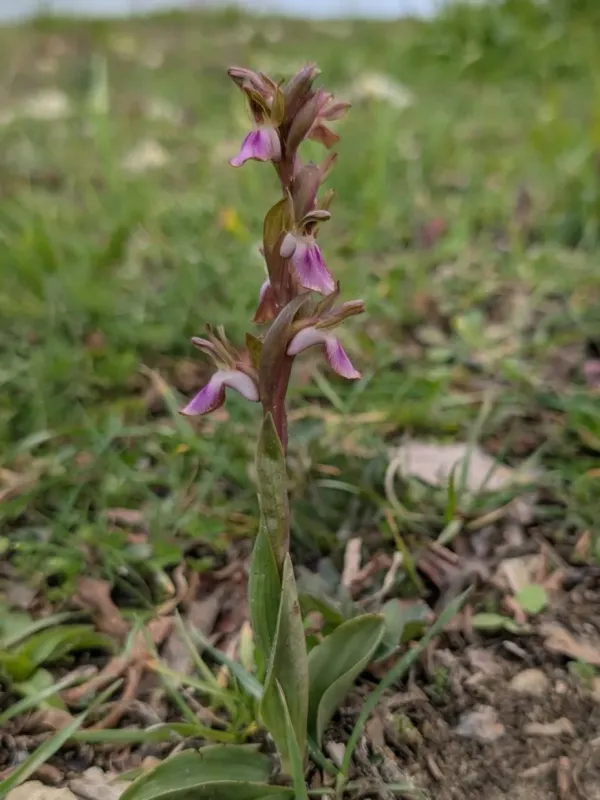
The plant is characterized by its pair of underground tuberous roots, which act as storage organs for energy during the dormant season. The stem is relatively short, typically reaching 15–30 cm in height, and is accompanied by a rosette of broad, dark green leaves. The inflorescence consists of a dense spike of purple or violet flowers that bloom in early spring.
Agricultural success with this species depends heavily on precise environmental conditions. It requires well-aerated, limestone-based soils with an alkaline pH level. Poor drainage or waterlogged conditions are fatal to the plant, as the tubers are highly susceptible to rot when oxygen levels in the substrate are insufficient.
The species demands a Mediterranean-like climate, characterized by cool, moist springs for active growth and warm, dry summers to facilitate the transition into dormancy. Sunlight is essential, as the hillside orchid is a heliophile and does not perform well in shaded areas where competitive vegetation might suppress its development.
Cultivation is further complicated by the obligatory symbiotic relationship with specific soil fungi (mycorrhiza). Without these organisms, the plant cannot efficiently absorb nutrients or germinate from seed in a conventional field setting. Consequently, vegetative propagation through careful division of dormant tubers remains the primary method for maintaining plant stocks.
Main diseases and pests
The primary threats to Anacamptis collina are fungal diseases, particularly root rot caused by poor soil drainage and stagnant water. These pathogens can destroy the tuberous system within a few weeks if conditions remain damp, leading to the rapid decline and death of the plant.
Pests that pose significant risks include various soil-dwelling larvae, such as wireworms, which physically damage the tubers. Furthermore, aphids and other sap-sucking insects can stress the foliage during the spring growing phase, thereby hindering the energy accumulation necessary for the plant to survive the summer dormant period.