
Anacamptis boryi
Anacamptis boryi
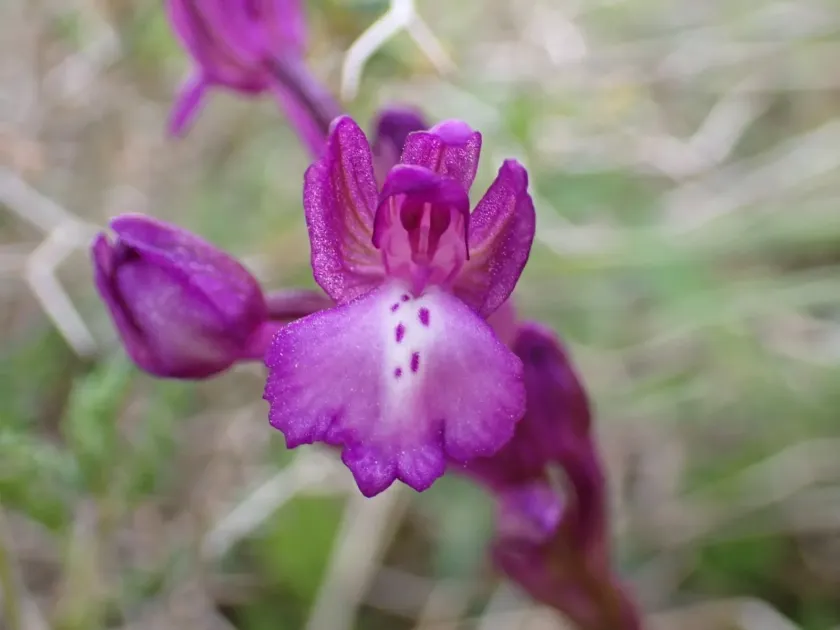
Description
Growing requirements
Anacamptis boryi is a perennial herbaceous plant belonging to the Orchidaceae family. It is not an agricultural crop but a wild orchid species that holds scientific and ecological interest due to its specific environmental requirements and narrow distribution range.
The native habitat of this plant is primarily restricted to the Mediterranean region, including parts of Greece and Crete. It thrives in habitats that experience typical Mediterranean climate patterns, characterized by warm, wet winters and hot, dry summers that trigger the dormancy phase.
The soil requirements are quite specific: the species prefers calcareous, well-drained substrates. Proper drainage is crucial, as the plant is highly intolerant of waterlogging, which can quickly lead to the decay of its tuberous root system.
Botanically, the plant is distinguished by a small, compact inflorescence with pink to purple flowers. Its survival mechanism relies on underground tubers, which store energy throughout the dormant summer months to ensure rapid growth and flowering during the favorable spring season.
Reproduction is highly specialized and depends on symbiotic relationships with mycorrhizal fungi in the soil. Because the seeds lack endosperm, they cannot germinate without these specific fungi, which underscores the extreme fragility of the species in changing environments.
Main diseases and pests
The most significant threat to Anacamptis boryi is the loss of its natural habitat due to urbanization and agricultural expansion. When natural grasslands are converted into pastures or building sites, the delicate balance required for the orchid to thrive is permanently destroyed.
Pests and herbivores, including various species of insects and grazing animals, can severely impact the population by consuming flower spikes before pollination occurs. This prevents the production of seeds and inhibits the plant's ability to propagate in the wild.
Fungal pathogens pose a risk to the plant's health, particularly when the soil's chemical composition is altered by fertilizers or industrial runoff. Such changes can disrupt the mycorrhizal network, which is essential for the orchid's nutritional uptake.
Climate change poses a long-term threat as shifting rainfall patterns may cause early drought conditions. If the moisture levels drop before the plant has completed its seed development cycle, the survival of the next generation of plants is compromised.
Illegal collecting by enthusiasts represents a persistent danger. Due to the orchid's attractive appearance, individual plants are often removed from the wild, where they almost invariably die because they cannot be transplanted into standard garden conditions without their fungal partners.