
Aerides
Aerides Lour.
Description
Growing requirements
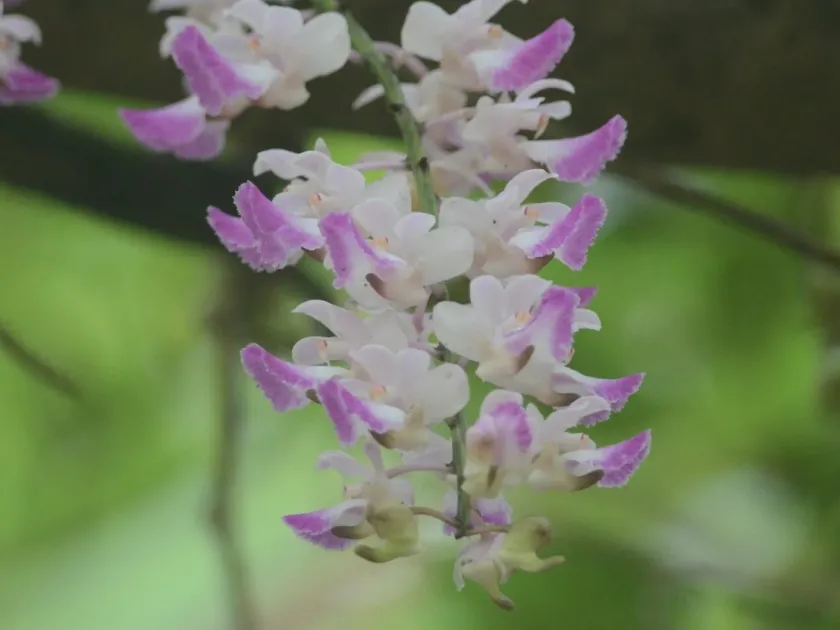
Aerides is a genus of tropical epiphytic plants within the Orchidaceae family, native to the regions of India, Southeast Asia, and the Philippines. These plants are prized for their long, pendulous inflorescences and fragrant flowers that often resemble the shape of a fox's tail.
Cultivation requires a specific microclimate characterized by high humidity levels ranging from 65% to 80%. In greenhouse conditions, maintaining these humidity levels is essential for the healthy development of both roots and aerial foliage.
Optimal temperature ranges for Aerides fall between 22°C and 30°C during the day. As these are warm-growing orchids, protection from cold drafts and sudden drops in temperature is necessary to prevent physiological stress or plant dormancy.
The potting medium must provide exceptional drainage and mimic the bark of host trees. A standard mixture consisting of high-quality fir or pine bark, charcoal, and a small amount of perlite is recommended for stable growth and preventing root suffocation.
Light intensity plays a crucial role in the flowering process. Aerides plants thrive in bright, filtered light. Too much shade will result in dark green foliage but will inhibit blooming, while excessive direct sun exposure will quickly cause leaf desiccation.
Main diseases and pests
Scale insects and mealybugs are the most common pests found on Aerides. These insects attach to the undersides of leaves and leaf axils, sucking the plant's sap and weakening its overall structure over time.
Root rot caused by Rhizoctonia or Phytophthora fungi remains the most significant threat to the plant's survival. This condition is usually triggered by an improper potting medium that retains too much moisture and fails to allow the roots to dry out between watering cycles.