
Heliconia bihai
Heliconia bihai
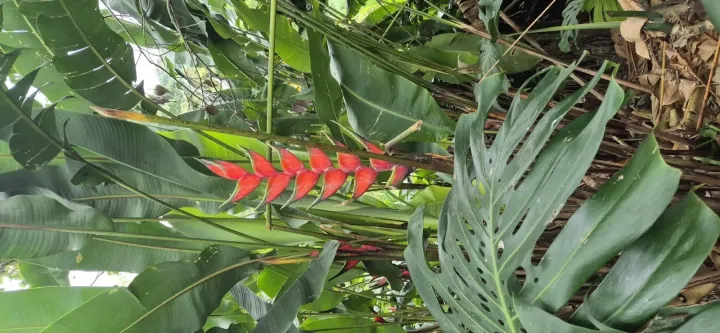
Description
Sowing dates
Heliconia bihai belongs to the Heliconiaceae family. In industrial farming, the plant is most commonly propagated vegetatively through the division of rhizomes.
The optimal time for establishing plantations depends on the region, but in tropical climates, planting is usually performed at the beginning of the rainy season. This allows the root system to adapt and establish itself before peak temperatures occur.
For planting, rhizome divisions with 2–3 healthy buds are selected. The material must be cleaned of soil and treated with fungicides to prevent rot during the early stages of growth.
Planting is carried out in prepared trenches or pits at a depth of 15–20 centimeters. A spacing of 1.5 to 2 meters between plants is maintained to ensure adequate nutrient access and air circulation.
Initial sprouting occurs 3–5 weeks after planting. It is crucial to maintain consistent soil moisture during the germination phase while avoiding waterlogging, which can cause bud rot.
Growing requirements
This crop is a classic tropical plant that requires high temperatures for full vegetative development. The ideal temperature range is between 22–30 degrees Celsius; growth significantly slows if temperatures fall below 15 degrees.
Heliconia bihai prefers rich, loose, and well-drained organic soils. The pH level should be slightly acidic to neutral, ideally between 5.5 and 6.5.
Light plays a critical role in flowering. While the plant can tolerate light shade, areas with bright, diffused light are preferred for commercial production of high-quality inflorescences.
High humidity is a mandatory requirement for normal vegetation. In open-field conditions with insufficient rainfall, an irrigation system should be implemented to maintain humidity levels at 70–80 percent.
The plant is highly sensitive to strong winds, which can damage large leaves. Therefore, sheltered sites or natural windbreaks around the plantation perimeter should be considered when choosing a location.
Yield
The productivity of Heliconia bihai depends directly on the agricultural background and the specific cultivar. On average, a mature plant can produce between 5 and 10 full-grown flower stalks per season.
The first harvest from vegetative propagation can be expected 10–14 months after planting. Full industrial yield typically begins in the second year of vegetation.
To increase yield, regular fertilization with NPK fertilizers is applied. Potassium is especially important during the formation of flower spikes, as it improves their coloration and the density of the bracts.
A decline in yield is often observed as rhizomes age. Rejuvenating the plantation through division or replanting every 4–5 years is recommended to maintain high production levels.
The intensity of harvesting should be balanced. Removing flower stalks stimulates the growth of new shoots, but excessive depletion of the parent plant can lead to smaller inflorescences in subsequent seasons.
Main diseases and pests
Fungal infections, such as root rot and leaf spots, are among the most dangerous diseases. They arise primarily from improper watering regimes and poor soil aeration.
Viral diseases also pose a threat, manifesting as leaf mosaic patterns and inflorescence deformity. Since there are no treatments for these viruses, the primary control method is the removal and destruction of infected specimens.
Pests like spider mites and thrips cause the most significant damage by feeding on the sap of young leaves and buds, which degrades product marketability and reduces photosynthetic efficiency.
Scale insects and mealybugs often colonize leaf axils. Systemic insecticides should be applied and rotated to prevent pest resistance.
Preventative measures include regular crop monitoring, the removal of damaged plant debris, and maintaining high hygiene standards for tools during harvesting.
Harvesting
Harvesting should occur when the lower 2–3 bracts are fully colored and have achieved the characteristic stiffness of the variety. This ensures the longevity of the cut flowers in a vase.
Using a sharp, sterile pruner prevents tissue tearing, which can provide entry points for pathogens. Cuts are made at an angle, as close to the base of the shoot as possible without damaging the rhizome.
After harvesting, the product must be cooled immediately. Heliconia bihai is sensitive to cold damage, so the optimal storage temperature is 12–15 degrees Celsius.
To extend the vase life, stems are placed in clean water with added preservatives to inhibit bacterial growth. It is important to avoid getting water directly on the bracts to prevent rot.
Transportation is carried out in a vertical position to prevent deformation of the inflorescences. Properly handled, the flowers retain their commercial quality for 10–14 days.