
Swertia diluta
Swertia diluta
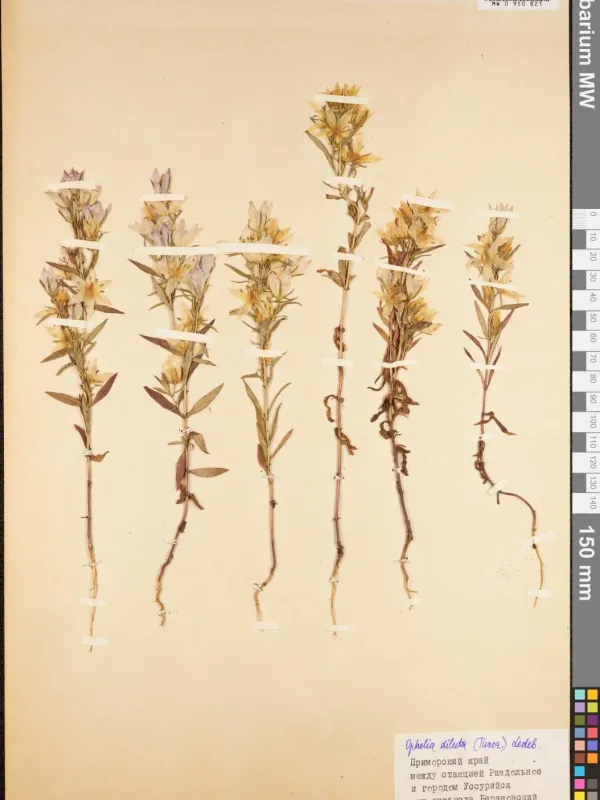
Description
Sowing dates
Swertia diluta is a herbaceous species that requires precise environmental triggers for germination. Because the seeds often have innate dormancy, cold stratification at low positive temperatures for 30 to 60 days is essential for successful emergence.
In temperate climates, sowing directly into the field is recommended during late autumn. This allows the seeds to undergo natural stratification cycles over the winter, leading to more uniform germination in the spring.
For spring sowing, seeds should be sown shallowly, as they are very small and have limited nutrient reserves. A sowing depth of no more than 0.5 cm is ideal, often covered with a thin layer of sand to prevent crusting and ensure moisture retention.
Seedling development is characteristically slow. During the first year of growth, the plant focuses on establishing a vegetative rosette of leaves. The reproductive stage, characterized by a flowering stalk, typically occurs in the second year.
For commercial cultivation, utilizing a greenhouse or seedbed system is preferred. This provides better control over water availability and soil temperature, which significantly increases the survival rate of young seedlings during the delicate establishment phase.
Growing requirements
As a member of the Gentianaceae family, Swertia diluta is naturally adapted to high-altitude ecosystems. Consequently, it has specific requirements regarding its growing environment, favoring cool temperatures and stable humidity.
The plant thrives in loose, humus-rich loamy soils with a neutral or slightly acidic pH. Excellent drainage is non-negotiable; waterlogged soil leads to rapid crown and root rot, which is the primary cause of crop failure.
Light requirements are moderate. While the plant loves open, bright spaces, it is sensitive to intense midday heat. Providing light shading during peak summer temperatures can prevent heat stress and foliage desiccation.
Air humidity should be maintained at a moderate level, typically between 60% and 70%. In arid climates, utilizing overhead irrigation or micro-sprinklers can help create the necessary microclimate for healthy growth.
Temperature fluctuations are generally tolerated well if they stay within a reasonable range (10–22°C). However, the plant is not well-suited for tropical or extremely hot climates, which inhibit its physiological maturity.
Yield
The economic yield of Swertia diluta is defined by the quality and quantity of its medicinal compounds, including xanthones and iridoid glycosides. Maximum biomass production occurs during the second year of growth when the plant enters the flowering phase.
Typical yields of dried aerial parts range from 1 to 2 tonnes per hectare, depending on soil fertility and plant density. Regular weeding and mineral supplementation with micronutrients can help optimize these figures.
Harvest scheduling is critical. Since the secondary metabolites are most concentrated at the start of full bloom, the timing of the harvest must be strictly managed to maximize the pharmacological potency of the final product.
Seed production should be managed on a separate plot or on a portion of the field left unharvested. Maintaining a healthy seed stock is vital for long-term farm viability and ensuring consistent genetic performance.
Quality control standards involve laboratory testing for active ingredient concentrations. Maintaining strict adherence to these standards is necessary for selling raw material to the pharmaceutical industry.
Main diseases and pests
Root rot, primarily caused by Fusarium and Phytophthora species, is the most significant threat to the culture. Poor soil drainage and excessive irrigation are the leading triggers for these infections.
Powdery mildew is a common issue during periods of high humidity and poor ventilation. Proper spacing between plants is essential to promote airflow and reduce the incidence of fungal outbreaks.
Pests like aphids and spider mites can attack the tender leaves of the rosettes. Integrated pest management strategies, including the use of biological controls, should be employed to protect the leaves without leaving toxic residues.
Slugs and snails can cause substantial damage to young plants in moist conditions. Barrier methods, such as copper tape or organic deterrents, are highly effective in mitigating these threats.
Crop rotation is essential for the long-term health of the field. Planting Swertia on the same land for more than three years facilitates the buildup of soil-borne pathogens, necessitating at least a three-year break period.
Harvesting
Harvesting Swertia diluta occurs at the peak of the flowering period. The entire aerial part of the plant is collected, as it contains the highest density of medicinal compounds at this life cycle stage.
Using sharp tools to cut the plants at least 5–10 cm above the ground ensures that the root crown remains intact, which is important if the plant exhibits perennial tendencies in the specific climate.
Post-harvest management is the most critical stage. The material must be transported quickly to drying facilities to avoid the heat-induced decay that begins within hours of cutting.
Drying is performed in the shade using natural air circulation or specialized drying tunnels at a temperature not exceeding 40°C. High heat or direct sunlight will degrade the plant's valuable chemical components.
Once dried to a moisture content of approximately 10–12%, the material is packaged in breathable containers. Storage must occur in a dark, cool, and dry warehouse to maintain the integrity of the herbs until delivery.