
Swertia bimaculata
Swertia bimaculata
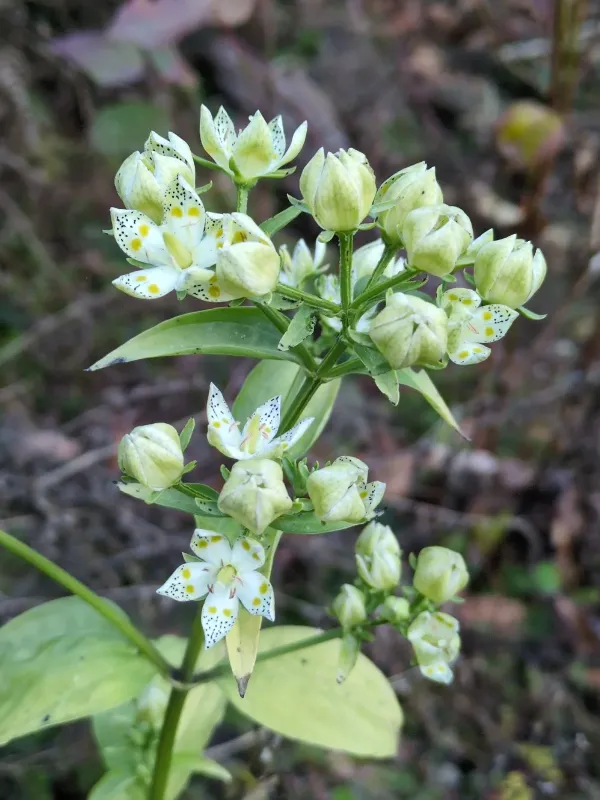
Description
Sowing dates
Swertia bimaculata is an annual herbaceous plant, meaning its full life cycle occurs within a single growing season. Propagation is performed by seed sowing, which should ideally take place in early to mid-spring once soil temperatures reach 10-12 degrees Celsius.
The seeds of this species are remarkably small, requiring surface sowing with very light covering. Using a fine-textured substrate and maintaining high surface humidity is essential for uniform germination, as seeds may fail if buried too deep or if they dry out prematurely.
When grown on a field scale, a row-cropping method is standard, with spacing of 30 to 40 centimeters between rows. This spacing ensures that individual plants have sufficient access to light and soil nutrients while allowing for mechanical weeding between rows.
Stratification of seeds for several weeks at lower temperatures prior to planting is highly recommended to improve overall germination rates. This mimics natural environmental conditions and breaks seed dormancy effectively.
Once seedlings reach the three-leaf stage, thinning is necessary to ensure each plant has roughly 15-20 centimeters of space. Proper spacing is a critical factor in producing robust plants with the necessary biochemical concentration for medicinal use.
Growing requirements
Swertia bimaculata is native to damp environments, including marshy meadows and stream banks, which dictates its high water requirements. Successful cultivation requires soil that is consistently moist but possesses good drainage to prevent waterlogging.
Fertile, loamy, or sandy-loam soils with a slightly acidic to neutral pH are ideal for this species. Integrating well-decomposed organic matter into the soil before sowing will support vigorous plant development and improve moisture retention.
Although the plant favors light, it performs best in regions where it receives partial shade during the hottest parts of the day. Exposure to extreme solar intensity combined with low humidity can cause leaf desiccation and reduce the quality of the harvest.
Temperature management is vital, with an ideal growth range between 18 and 24 degrees Celsius. Consistent temperatures during the growing season help the plant accumulate secondary metabolites, which are essential for its pharmacological value.
Regular irrigation is a cornerstone of the agronomic process for this species, especially during the flowering stage. Watering should be targeted at the base of the plant to keep the foliage dry, which significantly reduces the risk of fungal infections.
Yield
The yield of Swertia bimaculata is measured by the total dry weight of the aerial parts harvested during the peak flowering phase. Maximizing yield requires a focus on soil fertility and maintaining optimal moisture throughout the growth cycle.
Under intensive management and favorable weather conditions, growers can expect an output of approximately 15-25 decitons of dry raw material per hectare. Fluctuations in yield are common and depend heavily on environmental stability and seasonal rainfall patterns.
The application of micronutrients, specifically those containing boron and magnesium, can enhance enzymatic activity within the plant, potentially increasing the concentration of active medicinal compounds.
Careful monitoring during the vegetative period is necessary to identify the perfect moment for harvest, which is exactly when the plant is in full bloom. Harvesting too early or too late can lead to a lower concentration of active pharmacological substances.
Post-harvest handling is critical to maintaining high yields of quality product. Once cut, the material should be moved immediately to a drying facility to prevent degradation, which can lead to significant losses in saleable weight and potency.
Main diseases and pests
The most significant threats to Swertia bimaculata are fungal diseases, particularly root rot, which is common in over-saturated or poorly ventilated soil conditions. Proper site selection and drainage are the primary defense against these pathogens.
Botrytis (gray mold) can infect the stems and leaves if air circulation is poor or if humidity remains high for extended periods. Thinning the crop and removing surrounding weeds are effective ways to improve airflow and reduce fungal pressure.
Slugs and snails represent the primary pest threat to young seedlings. They can consume whole patches of crops in a short time, making early-season monitoring and the use of physical barriers or biological controls necessary.
Aphids may target the tender tops of the plants, causing stunting and potential viral transmission. Given that this is a medicinal crop, biological control agents like ladybugs or neem oil-based sprays are preferred over synthetic pesticides.
Crop rotation is an essential preventive measure to break the life cycles of soil-borne diseases. Avoiding the planting of Swertia on the same plot for at least three years helps maintain soil health and reduces the need for chemical intervention.
Harvesting
The harvesting process for Swertia bimaculata is a singular operation performed at the peak of the flowering cycle. This timing is chosen specifically to ensure that the plant contains the highest possible concentration of its characteristic active compounds.
Plants are cut roughly 5-10 centimeters above the soil surface using sharp, clean tools. This allows for clean edges on the stems, which promotes better handling and reduces the chances of contamination during the processing stage.
Immediate transportation from the field to the drying area is required to prevent the onset of spoilage. Freshly harvested biomass is highly prone to heating, which can destroy the delicate biochemical profile of the material within hours.
Drying should be conducted on racks in shaded areas with constant airflow. Keeping temperatures below 40 degrees Celsius ensures that the active medicinal components remain stable and do not degrade due to excessive heat.
Final storage involves placing the dried, processed herb in containers that prevent moisture ingress. Maintaining low humidity and dark conditions in the storage facility preserves the potency and shelf-life of the herbal material for commercial distribution.