
Gentiana paradoxa
Gentiana paradoxa
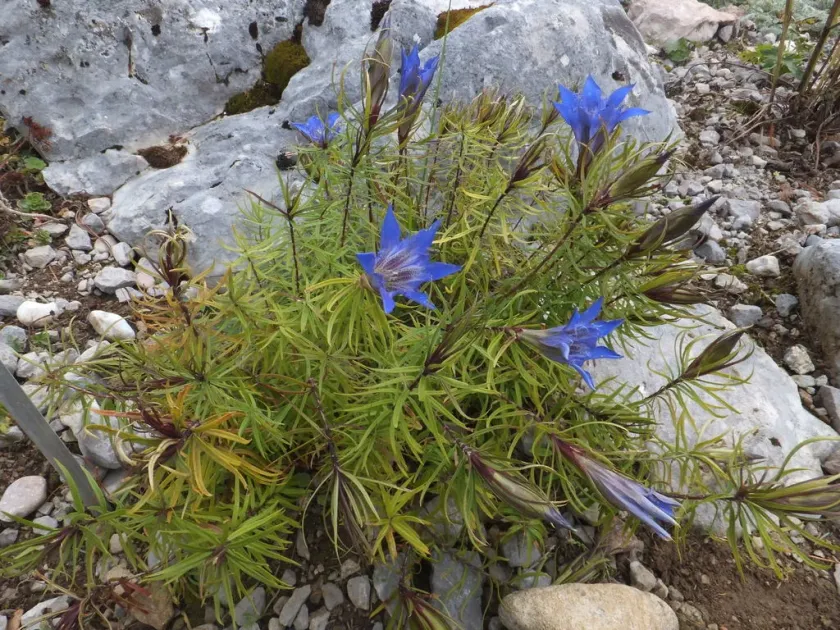
Description
Sowing dates
Seeds of Gentiana paradoxa require a period of cold stratification to germinate effectively. It is best to sow them in late autumn, allowing the natural winter cycle to break their dormancy before spring.
If starting seeds indoors, keep them in a refrigerated environment at around 4 degrees Celsius for 8 to 12 weeks. After stratification, place them in a bright, cool spot to encourage emergence.
Transplanting should be done carefully to avoid damaging the taproot. Ensure that young plants are spaced at least 25 to 30 centimeters apart to allow for proper foliage development.
The substrate for seedlings must be well-draining, consisting of a mix of potting soil and fine grit. Avoid heavy peat-based mixes that hold excessive moisture, as this can lead to seedling decay.
Keep the sowing trays away from direct heat sources. A stable, cool temperature is essential for the healthy development of Gentiana paradoxa during its initial growth phase.
Growing requirements
Gentiana paradoxa is a member of the Gentianaceae family, known for its stunning blue flowers. It is native to the Caucasus region and thrives in rocky, mountainous conditions.
The plant requires neutral to slightly acidic, well-draining soil. It performs exceptionally well in rock gardens or scree beds where water cannot accumulate near the root crown.
Light requirements involve partial shade or bright, filtered sunlight. While it can tolerate more light in cooler climates, protection from intense midday sun is necessary to prevent wilting.
Consistent soil moisture is key, but waterlogging must be avoided at all costs. Regular watering is particularly important during the active growing season when the plant is preparing to bloom.
Winter protection is advisable, especially in areas with little snow cover. A light covering of pine needles or gravel mulch helps stabilize the ground temperature around the roots.
Main diseases and pests
Slugs and snails are the primary pests that damage the foliage of Gentiana paradoxa. Using iron phosphate-based baits or barrier methods can help protect the plants during wet weather.
Botrytis, or gray mold, can affect the plant if air circulation is poor or if the foliage remains wet for extended periods. Pruning away damaged or crowded leaves helps mitigate this risk.
Root rot is almost always a result of poor soil drainage. If the soil becomes too compacted or stays saturated, the plant will quickly weaken and potentially die, necessitating improved soil structure.
Aphids can sometimes infest the budding flowers, causing them to distort. Careful monitoring and the application of mild horticultural soaps are usually sufficient to control these outbreaks.
Viral infections may manifest as yellowing or mottled leaves. As these diseases are untreatable, the only effective management strategy is the prompt removal and destruction of the infected specimen.