
Round-leaved gentian
Gentiana orbicularis
Description
Growing requirements
The Round-leaved gentian (Gentiana orbicularis) is a herbaceous perennial plant belonging to the Gentianaceae family. Native to the high mountain regions, specifically the Alps, this species is well-adapted to life in stony meadows and rocky crevices at high altitudes.
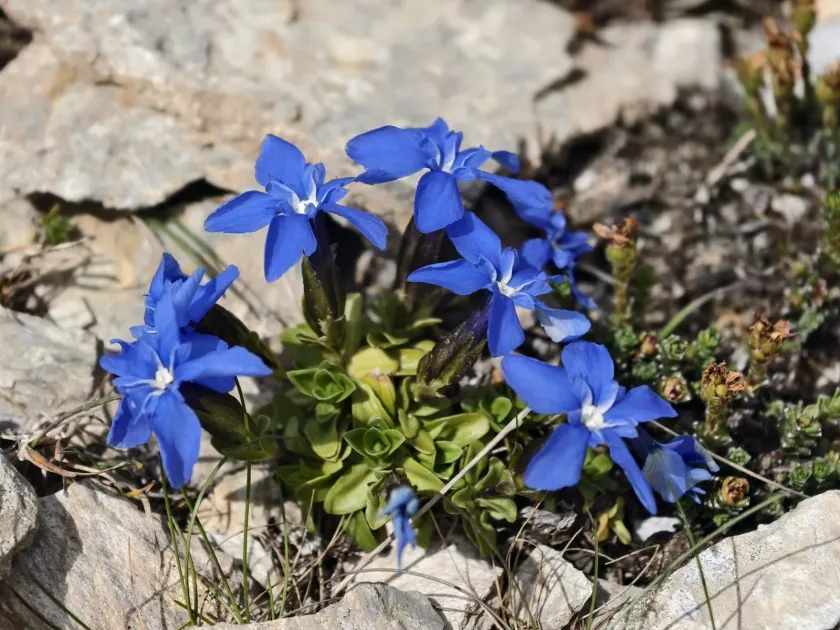
The botanical profile of the plant features a low-growing habit with a tight rosette of rounded leaves. During the blooming period, it produces striking bell-shaped flowers in shades of deep blue, which are iconic for the alpine ecosystem.
When cultivating this species, environmental conditions are paramount. It thrives in locations with high light intensity and cool temperatures. High humidity combined with heat is detrimental to its health, as the plant is adapted to the harsh mountain air.
Soil requirements involve a well-draining, mineral-rich substrate. A rocky, alkaline or neutral soil composition is ideal to mimic the natural scree slopes of its origin. Proper drainage is the most critical factor to prevent the roots from rotting during damp periods.
In terms of usage, the Round-leaved gentian is primarily utilized in horticultural practices for alpine gardens and specialized rockeries. Its compact size and vibrant floral display make it a sought-after plant for enthusiasts looking to recreate high-altitude flora.
Main diseases and pests
The main threat to the health of the plant in a garden setting is fungal rot of the root system. This is frequently caused by poor soil drainage or excessive moisture remaining around the root crown for too long during the summer months.
Pest pressures primarily come from slugs and snails that graze on the foliage. Protecting the plants involves maintaining a dry, clean surface around the rosettes, which can be effectively achieved by using a top dressing of fine grit or crushed stone.