
Nippon gentian
Gentiana nipponica
Description
Sowing dates
Propagation from seed is the primary method but requires patience due to the specific physiological dormancy of the seeds.
Seeds need a prolonged period of cold stratification, often requiring several months of exposure to temperatures between 2 and 5 degrees Celsius before germination occurs.
Sowing should be done in a grit-based, sterile seed compost. The seeds must not be covered deeply as they require light to successfully trigger the germination process.
Consistency is key during the seedling stage; the soil must remain evenly moist but never waterlogged to avoid the damping-off of young plants.
Transplanting is a delicate operation. The root system is fragile and does not tolerate significant disturbance, so moving plants to their final location should be done with care.
Growing requirements
Nippon gentian (Gentiana nipponica) is a perennial herbaceous plant belonging to the Gentianaceae family. It is native to the alpine regions of Japan, where it thrives in rocky and mountainous environments.
The plant demands a cool and moist microclimate. It is highly sensitive to heat and will struggle significantly in areas with high summer temperatures or arid conditions.
Soil requirements involve a well-drained, slightly acidic medium rich in organic matter. Proper drainage is essential to prevent the root rot that frequently kills this delicate species.
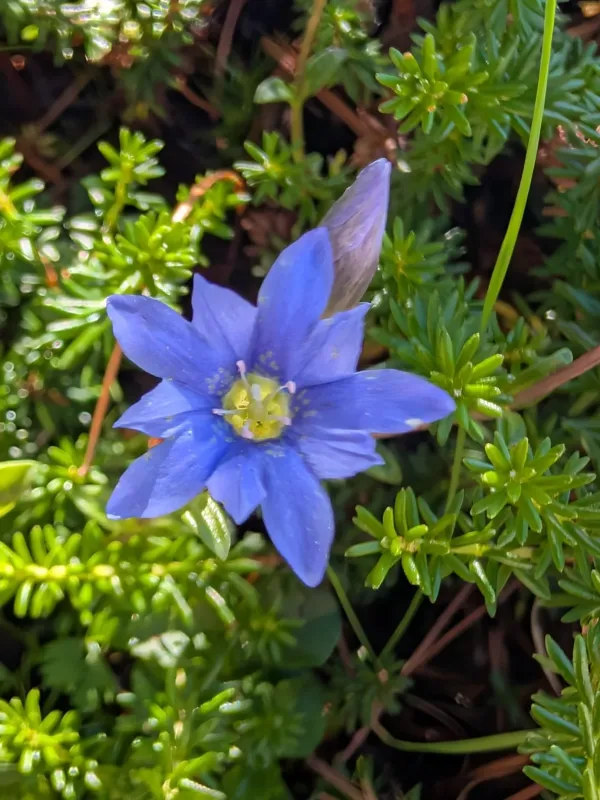
Botanically, it is recognized by its low-growing habit, narrow leaves, and solitary, intense blue, funnel-shaped flowers that bloom in high-altitude environments.
In landscape use, it is best suited for alpine houses or specialized rock gardens where environmental parameters can be meticulously controlled and monitored.
Main diseases and pests
Fungal diseases, particularly those related to moisture stress and humidity, are the most common health threats to Nippon gentian in garden settings.
Root rot is the most lethal issue, typically caused by waterlogged soil during the winter dormancy or excessive summer irrigation.
Slugs and snails present a constant threat during the growing season, especially in damp, shaded parts of the rockery where the gentians are planted.
A preventative approach includes improving airflow, avoiding overhead watering, and using gravel mulches to keep the foliage away from soil moisture.
If aphids appear, they should be managed with insecticidal soap or specific biological controls rather than harsh chemical agents, as the plant is sensitive to toxins.