
Willow gentian
Gentiana macrophylla
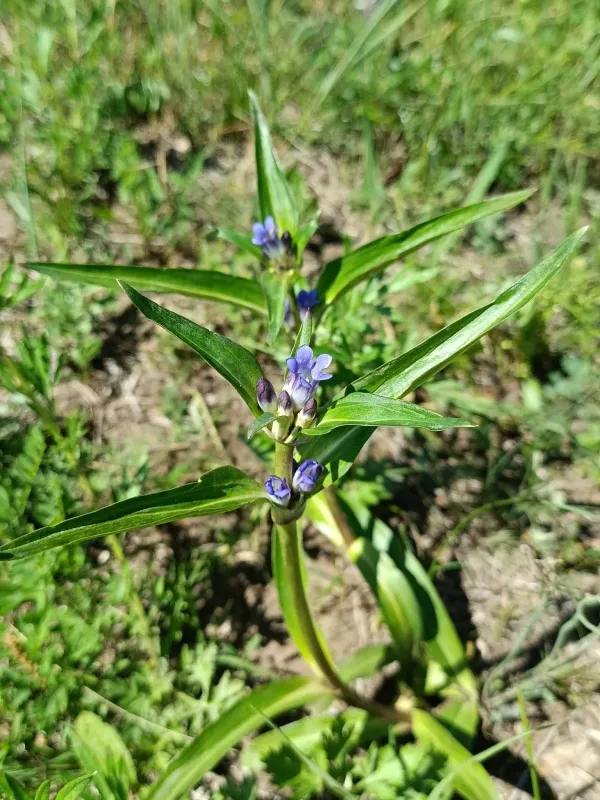
Description
Sowing dates
Willow gentian propagation begins with seeds that require a period of stratification to overcome dormancy, typically lasting about two months at low temperatures.
For large-scale cultivation, sowing seeds in the late autumn is recommended to allow the natural winter frost to provide the necessary conditions for germination in spring.
When sowing in trays, seeds should be scattered on the surface of a light, moist substrate and barely covered, as they require light to germinate effectively.
Once seedlings have developed their first true leaves, they should be transplanted carefully into individual pots to encourage stronger root development.
Planting out into the permanent field location should occur only after the risk of frost has passed, ensuring plants are spaced appropriately for growth.
Growing requirements
This species flourishes in sunny to semi-shaded positions, provided the soil remains consistently moist and well-drained to avoid root suffocation.
Rich, loamy soils with high organic matter content are ideal for maximizing the growth of this plant, which is naturally adapted to meadow habitats.
Soil pH should ideally be neutral or slightly acidic; adding peat or compost can help maintain the required moisture levels and soil structure.
Protection from extreme heat is essential in arid climates, as the plant does not tolerate prolonged dehydration or excessive heat stress during summer.
Regular weeding is critical during the establishment phase, as young plants do not compete well with vigorous weeds in the early stages of growth.
Yield
The economic value of Gentiana macrophylla lies primarily in its harvested roots, which are utilized in medicinal formulations due to their bitter glycoside content.
Harvesters typically wait until the third or fourth year of growth to ensure that the roots have reached a sufficient mass and biochemical potency.
Yields can vary significantly based on soil fertility and irrigation practices, with an average output of 500 to 800 kilograms of dried roots per hectare.
While the roots are the primary product, the aerial parts may also be harvested for specialized botanical extracts or ornamental purposes in some markets.
- Controlled irrigation during dry spells significantly improves overall biomass.
- Organic fertilization in early spring provides a steady nutrient supply for optimal development.
Main diseases and pests
Fungal root diseases are the most significant threat, often resulting from waterlogged conditions or poor air circulation around the root zone.
Leaf spot diseases may appear during seasons with high humidity, requiring careful monitoring and potential preventative application of fungicides.
Slugs and snails are notorious pests that can cause severe damage to young foliage, often requiring physical barriers or non-toxic baiting during wet weather.
Aphid infestations can weaken the plants by feeding on young stems and flowers, which may also reduce the viability of the seed production.
Integrated pest management, including regular crop rotation and sanitation, is essential for maintaining a healthy and productive plantation.
Harvesting
The harvest cycle concludes in late autumn when the senescence of the aerial parts indicates that nutrient storage in the roots is at its peak.
Roots must be carefully lifted to preserve their integrity, followed by thorough washing to ensure all soil particles are completely removed before processing.
The cleaned roots are then cut into manageable sections to ensure uniform drying, preventing potential mold growth during the dehydration process.
Drying is performed in climate-controlled environments at temperatures not exceeding 50 degrees Celsius to protect the integrity of the active medicinal compounds.
Dried product quality is maintained by storing the harvested roots in breathable packaging within a cool, dry, and dark storage facility.