
Closed bottle gentian
Gentiana clausa
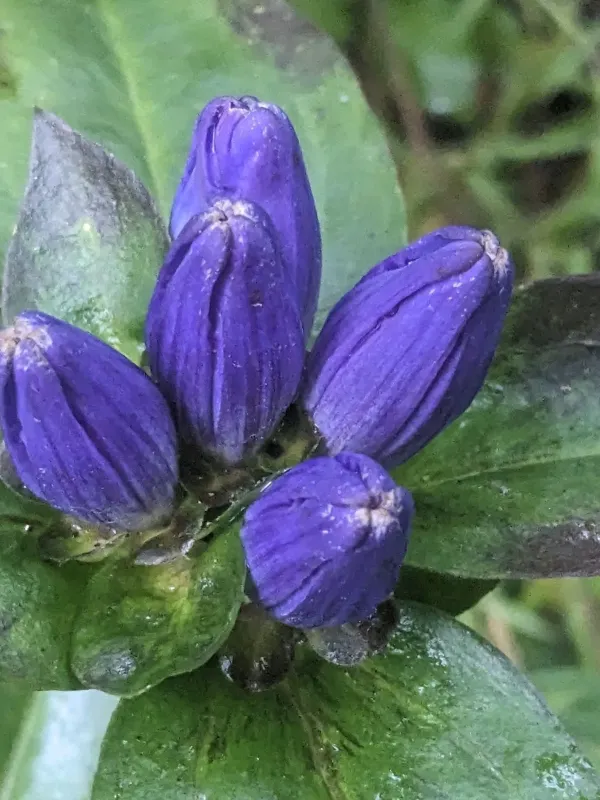
Description
Sowing dates
The seeds of the closed bottle gentian require mandatory stratification for successful germination, as they remain in a state of deep dormancy. In nursery conditions, it is recommended to sow them in late autumn or early winter in open ground or containers exposed to the cold.
The optimal time for sowing is during late autumn when stable freezing temperatures are established. The seeds should be sown superficially, covered only slightly with substrate, as they require light to initiate the germination process.
When sowing in the spring, seeds must be pre-chilled in a refrigerator at temperatures between +1 and +5 degrees Celsius for 4 to 8 weeks. This preparation mimics natural winter conditions and significantly increases the germination percentage.
Seedlings develop quite slowly in the initial stages of vegetation. After the emergence of true leaves, the seedlings should be pricked into individual pots or protected ground for further development, ensuring consistent irrigation.
The permanent planting site for young plants should be selected based on their slow growth rate and the need for stable conditions. It is crucial to prevent the root system from drying out during the first year of life, necessitating regular soil moisture monitoring.
Growing requirements
The closed bottle gentian belongs to the Gentianaceae family and is a typical representative of moisture-loving perennials. Naturally found in the eastern parts of North America, it prefers semi-shaded areas and humus-rich soils.
For successful cultivation, the plant requires well-drained but constantly moist areas. The species does not tolerate waterlogging; therefore, on heavy clay soils, it is essential to create a high-quality drainage layer made of crushed stone or coarse sand.
The optimal pH level for the gentian is in the slightly acidic to neutral range. The plant reacts poorly to sudden shifts in acidity, making the application of lime or dolomite flour in the soil inadvisable for this crop.
Climatic conditions must correspond to the temperate zone with distinct seasonal changes. The closed bottle gentian is highly winter-hardy, although in regions with snowless winters, light mulching of the root zone with peat or pine needles is recommended.
During the active growth period, the culture needs protection from direct midday sun. The best locations for planting are areas with diffused light, such as eastern-facing slopes or the periphery of tree canopy circles.
Main diseases and pests
Slugs and snails pose the primary threat to this culture, as they actively feed on tender leaves and buds during high-humidity periods. Mechanical traps or modern metaldehyde-based control agents are used to mitigate this damage.
If irrigation practices are poor, especially in conditions of low ventilation, the plant can be affected by fungal diseases such as grey mold. To prevent this, avoid wetting the leaves during irrigation and maintain appropriate plant spacing.
The root system of the gentian is sensitive to rot when there is excessive moisture stagnation in the root zone. Infected specimens often die, making strict adherence to drainage management and avoiding soil waterlogging in autumn vital.
Aphids may appear on young shoot tips during hot and dry weather, slowing the plant's growth. The use of systemic insecticides helps to quickly suppress infestations and restore the plant's vegetation.
Viral diseases are rare, but upon detection, the affected plant should be immediately removed and destroyed. Maintaining the cleanliness of garden tools and controlling insect vectors are the primary methods of prevention.
Harvesting
The closed bottle gentian is primarily used in ornamental horticulture as an accent plant for rockeries and shaded gardens. Seed collection is carried out after the capsules have fully matured, changing color from green to brown.
It is important to harvest the seeds before the capsules crack and the seeds disperse spontaneously onto the ground. The collected material is dried in paper bags in a warm, ventilated area and subsequently cleaned of plant debris.
For breeding purposes or commercial propagation, it is important to select the largest and most mature specimens. High-quality seed material maintains its viability when stored in a cool, dry place for no more than one to two years.
In landscape design, the plant's flowering is valued for the unique form of the inflorescences, which remain closed even during the peak of their decorative phase. This gives the plant a distinct appearance, making it highly sought after by collectors.
Cutting characteristics are limited, but with proper care, the plant retains its freshness in the flowerbed for a long time. After flowering concludes, pruning the flower stalks is recommended to prevent exhaustion of the crown and stimulate bud formation for the following season.