
Short-leaved gentian
Gentiana brachyphylla
Description
Growing requirements
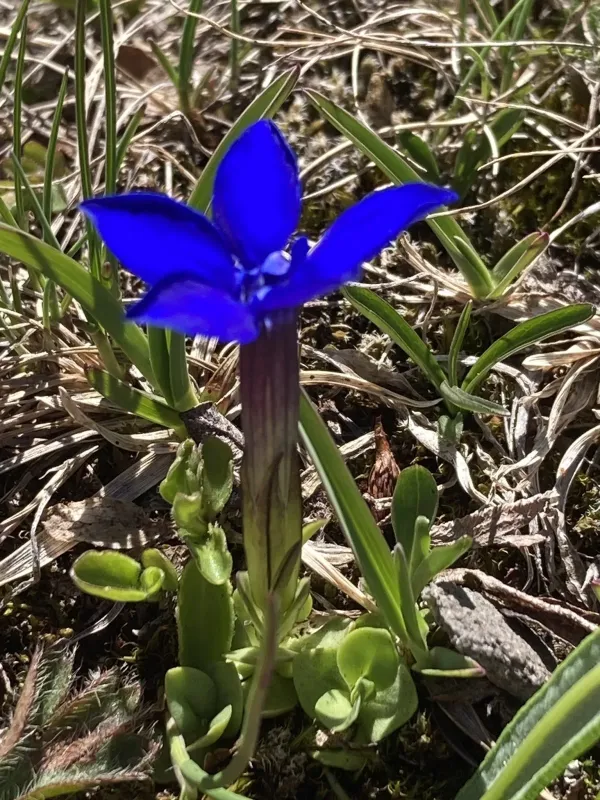
The short-leaved gentian (Gentiana brachyphylla) is a high-altitude plant species belonging to the Gentianaceae family. It is native to the Alps and other mountain ranges of Europe, typically growing on rocky terrain, moraines, and alpine meadows at significant elevations.
Botanically, it is a small, perennial plant that forms tight, dense cushions of foliage. Its deep blue, trumpet-shaped flowers are iconic to alpine flora, blooming shortly after the snow melts. The plant is perfectly adapted to the harsh conditions of high mountains, including low temperatures and extreme exposure.
Regarding climatic needs, this plant requires cool, fresh air and a distinct winter dormancy period. It struggles to survive in lowland environments where summer heat and high humidity inhibit its growth. Full sunlight exposure is necessary for the development of its intense flower coloration.
The soil requirements for Gentiana brachyphylla are very specific: it needs a gritty, fast-draining medium that is poor in organic matter. A mixture of gravel, grit, and sandy loam is recommended to simulate its natural habitat and ensure that water does not stagnate around the roots.
Cultivation is mainly practiced by rock garden enthusiasts and alpine plant collectors. Because it is slow-growing and requires precise management, it is not considered a mass-produced agricultural crop, but rather a high-value ornamental plant for specialized horticultural collections.
Main diseases and pests
Fungal diseases, particularly root rots triggered by damp, stagnant conditions, are the primary threat to the short-leaved gentian. Proper site selection and superior drainage systems are the best prevention strategies to avoid the loss of mature plants.
Slugs and snails are the most common pests, as they are attracted to the succulent-like foliage and tender flower buds. Frequent monitoring is advised during the spring and summer months to prevent these pests from damaging the plant’s structural integrity.
Soil chemistry imbalances, often caused by hard water irrigation, can lead to nutrient lockouts. The buildup of calcium and other mineral salts can severely stress the plant, so using rainwater or distilled water is highly recommended for optimal health.
Competition from more aggressive plant species is a silent threat. Since the short-leaved gentian is low-growing and slow to establish, it can easily be smothered by weeds if the area is not kept clean and regularly maintained.
Poor ventilation during warm, humid spells can encourage the development of mold on the cushion surface. Ensuring that the site is breezy and that the foliage stays dry is essential to preventing pathological issues and maintaining plant vigor throughout the season.