
White Gentian
Gentiana alba
Description
Growing requirements
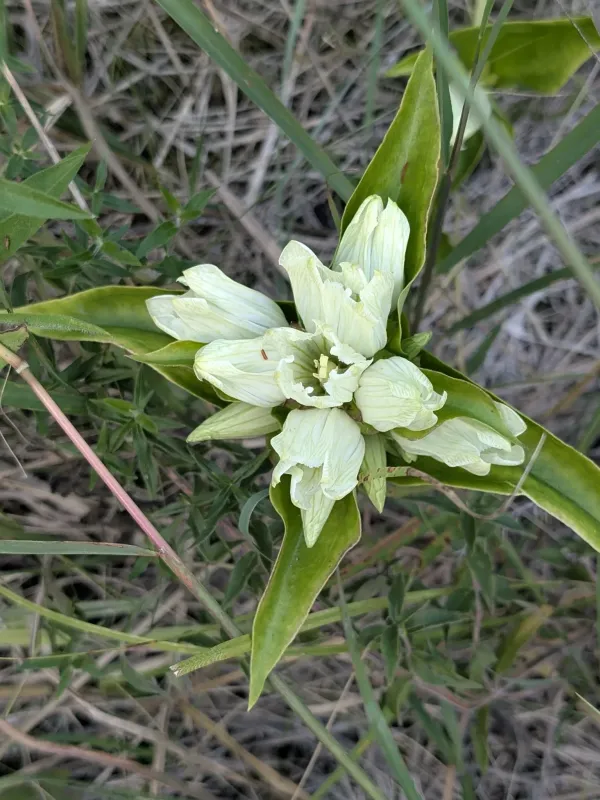
White gentian (Gentiana alba) is a perennial herbaceous plant belonging to the Gentianaceae family. Unlike the typical blue-flowered members of this genus, this species is distinguished by its creamy-white, tubular flowers that remain mostly closed.
The native habitat of this plant includes the central and eastern regions of North America. It is typically found in open woodlands, rocky slopes, and prairie remnants, which suggests a preference for well-drained locations with adequate sunlight exposure.
Botanically, it features sturdy, erect stems that reach heights between 40 to 90 centimeters. The foliage is arranged in opposite pairs along the stem, with leaves being lanceolate or ovate in shape, providing a structural base for the terminal flower clusters.
Successful cultivation requires soil that is rich in organic matter and has excellent drainage. The plant thrives in neutral to slightly alkaline conditions, mimicking its natural calcareous habitat. Avoiding waterlogged soil is essential for the long-term health of the plant.
Regarding climate, the plant exhibits strong cold tolerance and is adapted to fluctuating moisture levels. It performs best in areas that receive full sun to partial shade, ensuring the stems remain upright and do not become overly leggy during the growing season.
Main diseases and pests
Fungal diseases, particularly root rots and leaf spots, represent the primary threats to white gentian. These issues are almost exclusively linked to excessive humidity and poor soil drainage, which compromise the plant's vascular health.
Slugs and snails are the most notorious pests for this crop, as they are attracted to the young, tender growth in the spring. Implementing physical barriers like crushed stone or organic deterrents is highly effective for population management.
Aphids may occasionally infest the developing flower buds, draining nutrients and potentially causing flower deformation. Periodic inspection of the stems allows for early intervention, often manageable through water sprays or horticultural soap applications.
Preventative maintenance is crucial, specifically the removal of dead foliage at the end of the season to eliminate overwintering sites for fungal spores. This simple step significantly reduces the incidence of disease in the following spring.
Ensuring proper spacing between plants is an essential cultural practice that promotes airflow and reduces the micro-humidity levels around the foliage, which is a key strategy for disease prevention in professional gentian cultivation.