
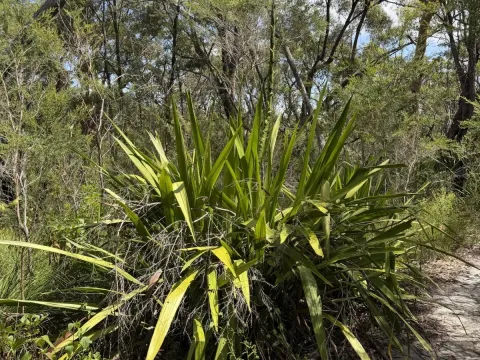
Doryanthes
Doryanthes Corrêa
Doryanthes is a genus of spectacular perennial herbaceous plants belonging to the Doryanthaceae family. In nature, these plants are native exclusively to the east coast of Australia, thriving in mild climatic conditions.
What the section contains

Doryanthes
The plant is a large rosette succulent with leathery, sword-shaped leaves that can reach several meters in length. It possesses a robust root system adapted for storing water and nutrients, which is an evolutionary response to periodic droughts.
For successful cultivation, Doryanthes requires well-drained sandy or loamy soils with a neutral or slightly acidic pH. The plant is extremely sensitive to waterlogging in the root zone, which can quickly lead to root rot.
It prefers sunny, open areas, although in regions with extremely high temperatures, it benefits from light shading during the hottest hours of the day. The optimal temperature range for active growth is between 18 and 25 degrees Celsius.
From a horticultural perspective, Doryanthes is highly valued as an ornamental plant for landscape design in subtropical regions. Its impressive flower stalks, reaching heights of 3 to 4 meters, make it a sought-after element for architectural planting in gardens and conservatories.
The primary threats to the health of Doryanthes are fungal infections, which flourish under conditions of excessive irrigation and poor soil aeration. These infections manifest as dark spots on the leaves and softening of the rosette base.
In greenhouse environments, the plant can be susceptible to common pests such as mealybugs and spider mites. Regular inspection of the leaf axils is crucial for the early detection and management of insect colonies.
Soil-borne nematodes can also cause significant damage to the root system, leading to the overall decline of the plant. Preventive measures include sterilizing the growing medium and using high-quality planting stock.
Systemic insecticides and acaricides are effective for pest control. It is vital to adhere to recommended dosages, as the leathery leaves of Doryanthes may be sensitive to harsh chemical formulations.
Maintaining a proper irrigation regime and ensuring sufficient air circulation are the best defenses against most diseases affecting this crop. With appropriate care, Doryanthes demonstrates high resilience to adverse environmental stressors.