
Atlas houseleek
Sempervivum atlanticum
Description
Growing requirements
Atlas houseleek (Sempervivum atlanticum) is a perennial succulent species belonging to the family Crassulaceae. Native to the mountainous regions of the Atlas Mountains, this plant is well-adapted to surviving in harsh, rocky environments with minimal soil resources.
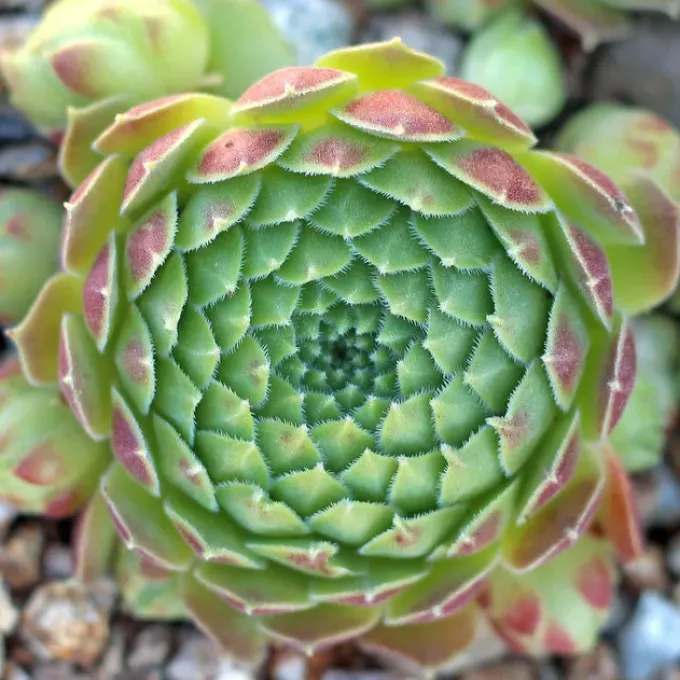
Botanically, it forms dense rosettes of fleshy, water-storing leaves. These leaves are covered with fine glandular hairs that serve as a protection against intense sunlight and dehydration. The rosettes expand through the production of offsets, creating a carpet-like mat over time.
The cultural requirements are strictly defined by its alpine origin. It demands full sun exposure to maintain its compact form and vibrant leaf coloration. Growing this plant in shaded areas leads to etiolation and significantly reduces its cold hardiness.
Well-draining, gritty soil is mandatory. The plant thrives in poor substrates consisting of gravel, coarse sand, and a small amount of mineral topsoil. Any accumulation of moisture near the root neck must be avoided to prevent physiological disorders.
In terms of climate, it is a highly resilient species capable of enduring both extreme summer heat and severe winter frosts. It remains dormant during the winter, where it is essential to ensure that the crown of the plant stays dry to avoid rot.
Main diseases and pests
The primary threats to the cultivation of Atlas houseleek involve fungal pathogens resulting from excessive soil moisture. Root rot and damping-off are the most lethal conditions for this species in garden environments with poor drainage.
Pest pressure often comes from mealybugs, which tend to nest in the dense crevices between leaves. These pests extract plant sap and can weaken the rosettes, making them more susceptible to subsequent secondary infections.
Slugs and snails can cause mechanical damage to the leaves during damp, overcast weather. Using a layer of grit or sharp gravel around the plants acts as a physical deterrent against these mollusks.
Root-knot nematodes can occasionally cause stunted growth and decay of the root system. Infested plants should be removed and destroyed to prevent the spread of the pest through the soil profile.
Maintaining proper air circulation is essential for plant health. Stagnant, humid air creates a microclimate that promotes the growth of powdery mildew and gray mold, especially if the plants are crowded together.