
High Houseleek
Sempervivum altum
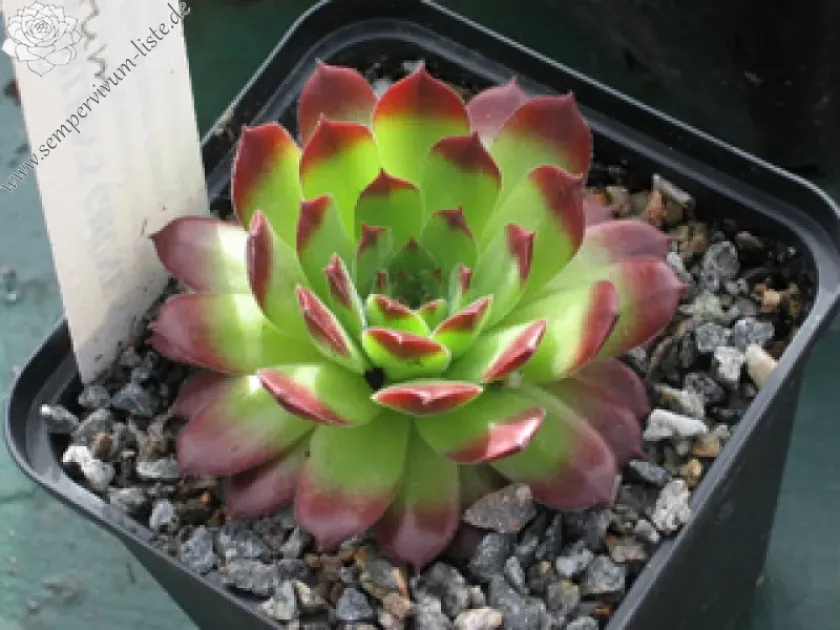
Description
Sowing dates
Seeds of the High Houseleek should be sown in the spring season when temperatures reach an optimal range of 15 to 20 degrees Celsius for germination.
Given the fine size of the seeds, they require surface sowing onto a sterile, well-draining sandy substrate without the need for covering with soil.
Vegetative propagation via offsets is the preferred commercial method, allowing for the rapid expansion of planting stock while maintaining uniform genetic traits.
Offsets are separated from the parent plant and placed in shallow containers, ensuring that the base is not buried too deep to prevent physiological distress.
Establishing the seedlings in a controlled environment ensures high survival rates before they are transplanted to their final location in the nursery field.
Growing requirements
High Houseleek belongs to the Crassulaceae family and is a succulent perennial plant known for its structural efficiency in water storage and climate adaptation.
Native to various mountainous regions, this plant thrives in rocky or sandy, nutrient-poor soils that provide excellent aeration and natural drainage.
The cultural requirements demand full exposure to sunlight to maintain the compact, dense architecture of the rosettes and vibrant coloration of the foliage.
Minimal nitrogen fertilization is necessary, as excessive nutrients lead to etiolation and make the plant more susceptible to environmental stress and pathogens.
Its hardiness makes it an ideal candidate for cultivation in varied climatic conditions, demonstrating resilience against both extreme heat and freezing winter temperatures.
Main diseases and pests
Root and crown rot represent the most significant threats to High Houseleek production, primarily driven by waterlogged soil conditions and poor air circulation.
Pests such as aphids and mealybugs can cause damage by feeding on the sap within the dense leaf rosettes, requiring frequent monitoring and prompt intervention.
Soil-borne nematodes can pose an additional challenge, compromising root systems and creating entry points for secondary bacterial or fungal infections.
Maintaining a dry, airy environment around the rosettes is a key preventative strategy to suppress the development of fungal spores and pest colonization.
When chemical control is necessary, applications must be applied carefully to avoid damaging the waxy cuticle of the leaves, which protects the plant from desiccation.