
Sedum urvillei
Sedum urvillei
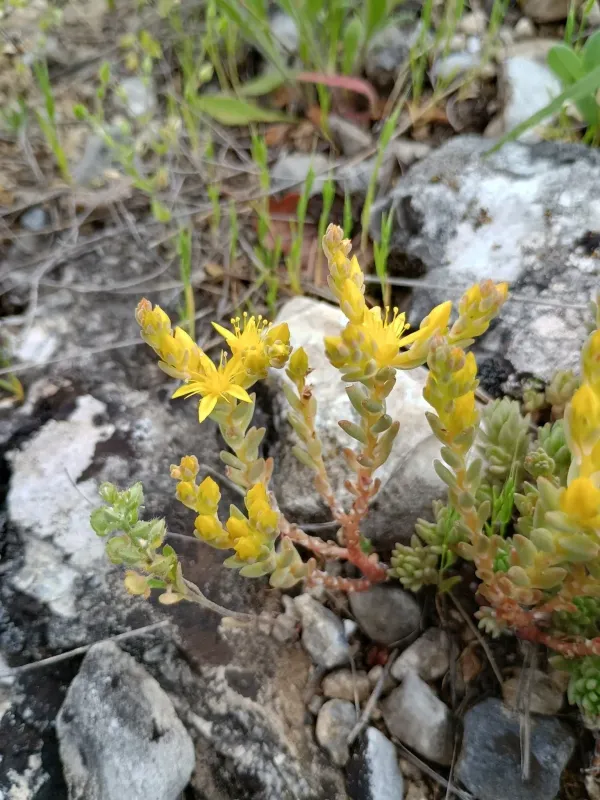
Description
Growing requirements
Sedum urvillei, commonly known as a type of stonecrop, belongs to the Crassulaceae family. This perennial succulent is characterized by its ability to store moisture in its thickened foliage, enabling it to thrive in arid and harsh environmental conditions.
The native habitat of Sedum urvillei is primarily located within the Balkan Peninsula and parts of the Eastern Mediterranean. It has evolved to grow in rocky, well-drained soils where most other plants struggle to establish, showcasing its extreme resilience.
Soil requirements for this culture are centered on drainage. It does not tolerate waterlogged conditions, which lead to rapid root rot. Agricultural sites should ideally provide sandy or rocky substrates to mimic the natural environment and facilitate water movement.
Climate preferences for Sedum urvillei are defined by high solar exposure. As a photophilous species, it requires full sun to maintain its structural integrity and compact growth habit. It is generally hardy and tolerant of wide temperature fluctuations.
Standard agronomic management involves minimal intervention. It does not require intensive fertilization, as excessive nutrients can cause lanky growth. Weed control is essential during the establishment phase, but once established, the plants naturally suppress most competitors.
Main diseases and pests
The primary threats to Sedum urvillei are fungal pathogens associated with excess moisture. Botrytis and various root rot fungi are the most common issues that arise when ventilation is poor and soil moisture is consistently high.
Pests, particularly aphids and mealybugs, are frequent visitors that can weaken the plants. These pests cluster in the crevices between leaves and stems, extracting nutrients and potentially introducing viral or bacterial infections through their feeding.
Management of pest populations relies on integrated pest management (IPM) practices. Physical removal or the application of insecticidal soaps is often sufficient for small-scale infestations, while systemic pesticides may be required for larger agricultural plots.
Proactive monitoring of the crop canopy is vital. Observing the plant for signs of discoloration, wilting, or the presence of honeydew is necessary to catch infestations before they cause significant damage to the plant's succulent tissues.
Overall, maintaining optimal site conditions—specifically maximizing airflow and sun exposure—is the most effective defense strategy. Proper spatial management of plants prevents the accumulation of humidity, which is the main precursor to most pathological threats.