
Narrow-petal stonecrop
Sedum stenopetalum
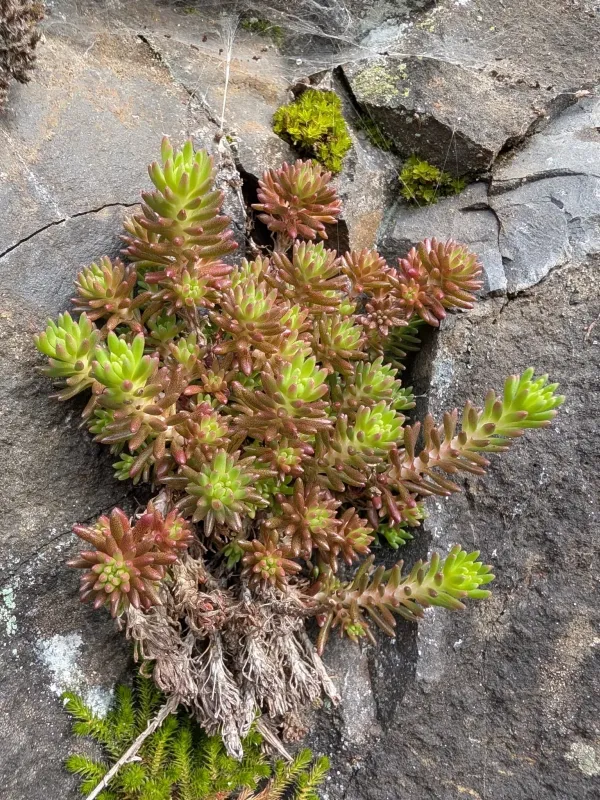
Description
Sowing dates
Narrow-petal stonecrop is propagated primarily through seeds or vegetative cuttings, with the latter being highly effective for rapid establishment of ground cover.
Seeds should be sown in a well-draining substrate during the cool season, as they often require a period of cold stratification to achieve optimal germination rates.
Vegetative propagation involves taking stem cuttings, which possess high rooting potential when placed in sandy, gritty, or well-aerated soil mixtures.
When transplanting, maintain a moderate spacing to allow the creeping stems to spread naturally while minimizing competition between individual plants.
Early establishment requires careful moisture management to ensure the roots anchor properly before the plants transition into their typical drought-tolerant growth phase.
Growing requirements
This species belongs to the Crassulaceae family and is recognized as a hardy succulent native to the mountainous regions and arid plains of North America.
The plant thrives in full sun exposure, requiring at least six to eight hours of direct light daily to maintain its compact habit and vibrant foliage coloration.
Soil conditions must be exceptionally well-drained, preferably rocky, gravelly, or sandy, as the species is highly sensitive to root asphyxiation caused by waterlogging.
It is remarkably tolerant of extreme temperature fluctuations and high-altitude conditions, making it an excellent candidate for alpine gardens and xeriscaping.
Nutrient requirements are low, as this plant is evolved to thrive in poor, rocky soils where nutrient-dense fertilizers would likely cause excessive, weak growth.
Main diseases and pests
Sedum stenopetalum is generally pest-resistant, though it can suffer from various physiological disorders if drainage conditions are not met correctly.
Root rot is the most common threat, usually triggered by excessive irrigation or the use of heavy, moisture-retentive soils that do not allow for adequate airflow.
Pests such as aphids and mealybugs may occasionally target the succulent foliage, particularly when plants are grown in confined or less-ventilated spaces.
Monitoring for signs of wilting or discoloration is essential, as these are often the primary indicators of underground issues affecting the root system.
Integrated pest management, focusing on proper spacing and limiting moisture, is the most effective approach for maintaining healthy and vigorous plant populations.