
Sedum stefco
Sedum stefco
Description
Growing requirements
Sedum stefco is a perennial herbaceous plant belonging to the Crassulaceae family. As a specialized succulent, it is highly valued for its ability to thrive in challenging environments where typical agricultural crops would fail.
Originating from the mountainous regions of the Balkan Peninsula, this species has evolved to grow on stony slopes and rock crevices. Its distribution in cultivation is largely confined to regions where well-drained, nutrient-poor soil can be maintained.
The primary growth requirements include full sun exposure and excellent drainage. It is a drought-tolerant species that relies on its succulent leaves to store water during periods of low rainfall, making it ideal for xeriscaping.
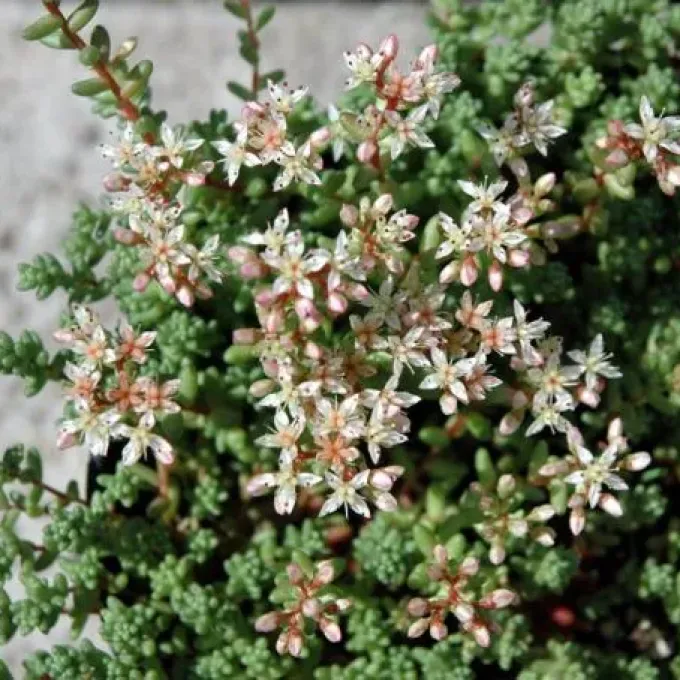
Botanically, the plant is characterized by its prostrate growth habit and clusters of fleshy leaves. It spreads via creeping stems that anchor themselves in the substrate, facilitating both vegetative propagation and soil stabilization.
In terms of agricultural and horticultural use, Sedum stefco is primarily utilized as a ground cover in landscaping, green roof systems, and rock gardens. Its low maintenance requirements and aesthetic appeal make it a preferred choice for eco-friendly architectural projects.
Main diseases and pests
The most significant threat to Sedum stefco is root rot, caused primarily by poor soil drainage and waterlogging. Ensuring the planting site has a porous substrate is the most effective preventative measure against this condition.
Pests such as mealybugs and aphids can infest the plants, particularly in protected or greenhouse environments. Regular monitoring and the application of appropriate horticultural soaps or systemic insecticides can help manage these infestations.
Slugs and snails pose a threat to the young leaves, especially in damp conditions. Using physical barriers or non-toxic baits can reduce the damage caused by these mollusks to the succulent foliage.
Fungal diseases like gray mold can occur in high humidity or overcrowded planting areas. Maintaining proper spacing between plants ensures better air circulation and reduces the risk of fungal proliferation.
Winter damage may occur due to sudden temperature drops and freeze-thaw cycles. While the plant is hardy, providing a mulch of coarse gravel can help stabilize soil moisture and protect the base of the plant during dormancy.