
Broadleaf stonecrop
Sedum spathulifolium
Description
Growing requirements
Broadleaf stonecrop (Sedum spathulifolium) is a perennial succulent plant belonging to the Crassulaceae family. Native to the western parts of North America, this species is well-adapted to rugged environments such as rocky outcrops and cliff crevices, exhibiting remarkable tolerance to harsh, dry conditions.
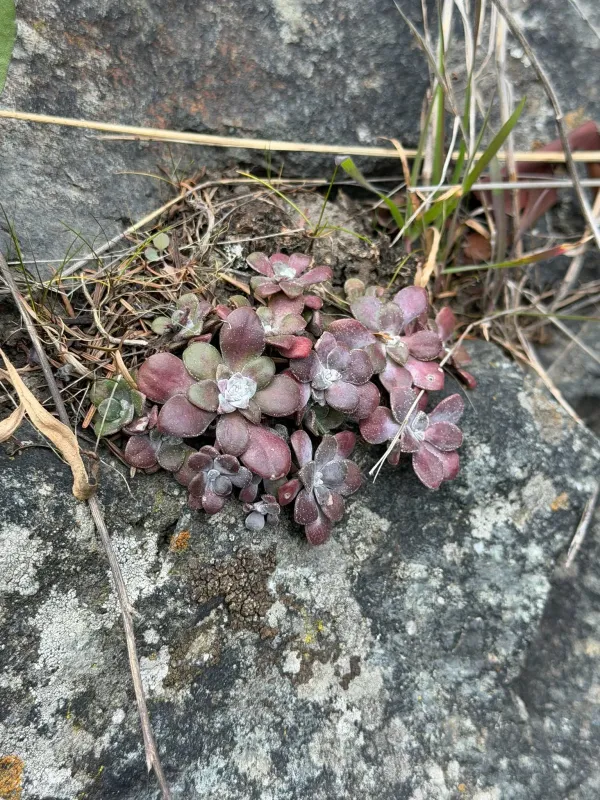
The plant features distinct, succulent leaves arranged in dense rosettes, often covered with a white, powdery wax that acts as a natural sunscreen. The foliage color is highly dynamic, shifting from silvery-green to vibrant shades of purple or red depending on the intensity of direct sunlight exposure.
Regarding climatic needs, this plant thrives in full sun, which is essential for maintaining its compact growth habit and vivid leaf coloration. When placed in shaded areas, the plant becomes leggy and loses its distinct aesthetic appeal, becoming more prone to decay due to reduced evaporation rates.
Soil requirements are strictly focused on drainage. Broadleaf stonecrop requires a gritty, well-draining substrate to thrive, as its roots are highly sensitive to standing water. In garden settings, amending heavy soils with gravel or pumice is standard practice to prevent root rot and ensure plant longevity.
Its primary agricultural and horticultural utility lies in rock garden design and low-maintenance landscape ground cover. Due to its drought-tolerant nature, it is a popular choice for xeriscaping projects and green roof installations where minimal intervention and water efficiency are prioritized.
Main diseases and pests
The most significant threats to the health of Sedum spathulifolium are fungal infections, specifically those resulting from excessive moisture and poor drainage. Root and crown rot represent the most common cause of plant failure, particularly during humid seasons if the plants are not sufficiently ventilated.
Pest pressure is relatively low but notable regarding gastropods such as slugs and snails, which can cause significant damage to the fleshy foliage. Aphids may occasionally congregate on the flower stems during the blooming season, though these infestations rarely threaten the long-term survival of healthy plants.