
Red stonecrop
Sedum rubens
Description
Growing requirements
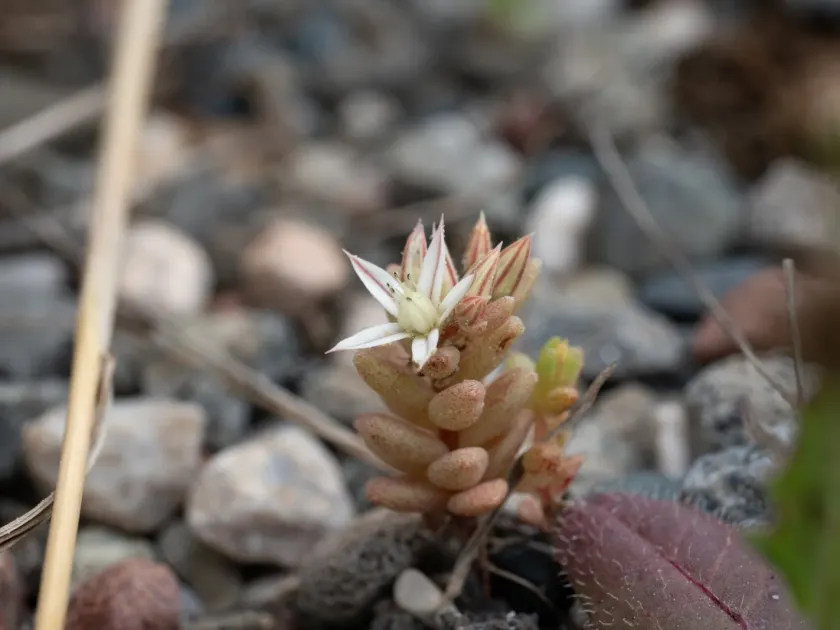
Sedum rubens, commonly known as red stonecrop, is a small annual succulent belonging to the Crassulaceae family. It is prized for its ability to thrive in extremely harsh environments where other vegetation fails.
The plant is native to the Mediterranean region, extending into parts of Central Asia and the Caucasus. It is naturally adapted to rocky slopes, sandy soils, and exposed sunny areas with minimal nutrient availability.
This species is exceptionally drought-tolerant, utilizing its succulent foliage to store moisture. It requires minimal irrigation, and in fact, excessive watering can be detrimental to the plant's health and vigor.
Soil requirements for Sedum rubens are quite specific: it demands high-drainage, grit-rich, or sandy substrates. It performs poorly in heavy, clay-based, or constantly damp soils, which lead to root health issues.
Regarding climate, the plant thrives in full sun exposure. The characteristic reddish coloration of the leaves is a stress response to high solar radiation and cold temperatures, which is considered a desirable trait in decorative cultivation.
Main diseases and pests
The most significant threat to red stonecrop is fungal infection caused by waterlogged soil. Root rot and damping-off disease are common when the drainage is insufficient or when the soil remains too humid.
Pests such as mealybugs and aphids can occasionally infest the foliage. These pests feed on the plant sap, often causing stunting and providing entry points for secondary infections or viral diseases.
Slugs and snails can also pose a threat to seedlings and young plants in wet, shaded conditions. Barriers such as crushed eggshells or gravel can help manage these pests effectively in a garden setting.
Maintaining proper air circulation around the plants is essential for prevention. Denser plantings may require thinning to ensure the foliage dries out quickly after rainfall, reducing the likelihood of mildew.
- Ensure rapid drainage via gravel mulch
- Check for mealybugs regularly
- Avoid overhead irrigation during humid weather