
Pink stonecrop
Sedum pulchellum
Description
Growing requirements
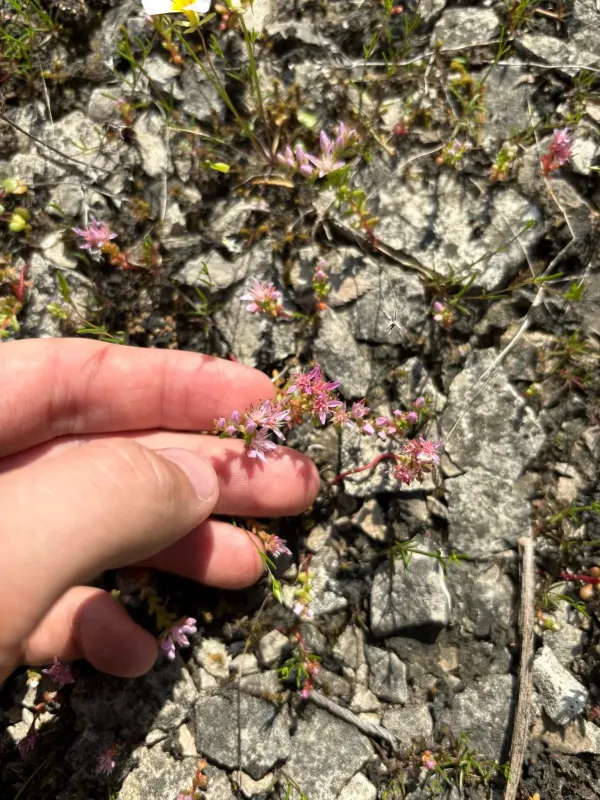
Pink stonecrop (Sedum pulchellum) is a perennial succulent plant belonging to the Crassulaceae family. It is widely recognized for its beautiful, star-shaped inflorescences and dense, mat-forming growth habit, which makes it an excellent choice for rock gardens.
Native to North America, this species naturally inhabits rocky outcrops and moist sandy areas. In cultivation, it performs best when its native environmental conditions are replicated, emphasizing well-drained but moist soils during the growing season.
The plant demonstrates remarkable adaptability to various soil types, including sandy, loamy, and rocky substrates. Unlike many other sedums, it can tolerate temporary waterlogging, making it versatile for diverse landscape applications.
Regarding climate, pink stonecrop is robust and hardy, capable of surviving temperature extremes characteristic of temperate climates. It requires full sunlight exposure to maintain its compact shape and vibrant leaf coloration throughout the year.
Maintenance is relatively straightforward, involving occasional weeding and minimal fertilization. Because of its vigorous growth rate, it may outcompete weeds on its own once it reaches maturity and forms a dense, continuous carpet.
Main diseases and pests
The primary diseases affecting Sedum pulchellum are fungal in nature, specifically those triggered by poor drainage. Root rot is a common issue if the soil remains waterlogged for extended periods, especially during cooler seasons.
Pests such as aphids can cause localized damage to fresh growth and floral stems. Early identification is key; if left untreated, aphid colonies can significantly weaken the plant and reduce its aesthetic appeal.
Slugs and snails are major threats to the fleshy, succulent leaves of the plant, especially in humid or rainy environments. Mechanical barriers, such as crushed stone mulch, are highly effective in deterring these gastropods.
Powdery mildew may occur if planting density is too high or if air circulation is restricted. Affected areas should be pruned to improve airflow, and horticultural soaps can be used to mitigate the spread of the fungus.
Regular monitoring of the planting site is essential for maintaining health. By keeping the site clean of debris and ensuring the plants have adequate space, growers can drastically reduce the need for chemical interventions.