
Sedum pallidum
Sedum pallidum
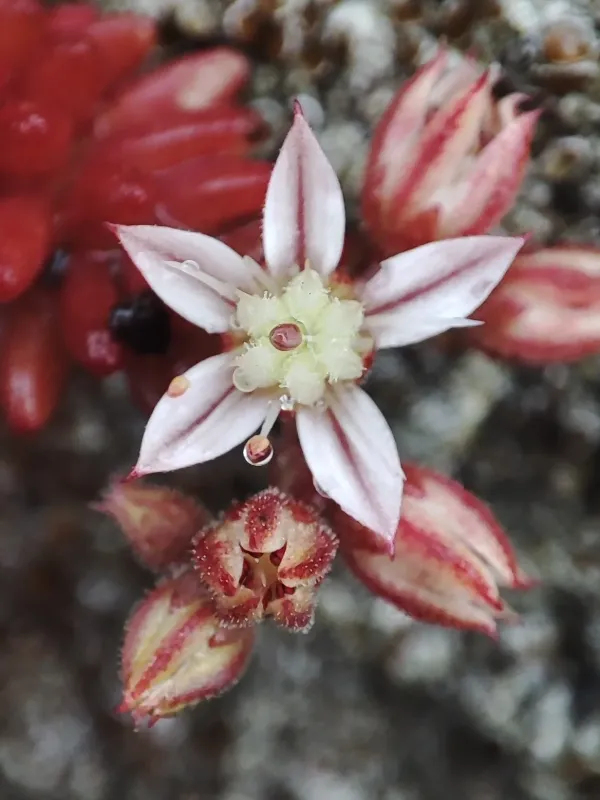
Description
Growing requirements
Sedum pallidum, commonly known as pale stonecrop, is a perennial succulent belonging to the Crassulaceae family. Its native habitat spans the mountainous and rocky regions of Southeastern Europe, the Caucasus, and Asia Minor, where it has evolved to thrive in harsh, dry environments with minimal nutrient content.
The plant is characterized by its prostrate growth habit, forming dense, low-growing mats of succulent, fleshy leaves. These leaves act as water storage organs, allowing the plant to survive extended periods of drought, which makes it a highly resilient species for xeriscaping and sustainable planting.
For optimal health and growth, Sedum pallidum requires full sun exposure. While it is highly adaptable, providing sufficient light is essential for maintaining its structural integrity, as shade-grown specimens tend to become etiolated, weak, and lose their characteristic compact form.
Soil drainage is the most critical factor in the cultivation of this species. It performs best in poor, sandy, or rocky soils that do not retain excess moisture. Heavy or clay-rich soils must be amended with grit or perlite to prevent the root system from suffocating or rotting.
In terms of хозяйственное (agricultural) use, this plant is valued for its ability to stabilize loose, rocky slopes and provide ground cover on poor soils where other crops would fail. It is also a popular choice for green roof installations due to its low maintenance requirements and environmental resilience.
Main diseases and pests
The primary threat to Sedum pallidum is overwatering and poor drainage, which frequently leads to root rot and crown rot. When the soil remains saturated, the plant quickly loses its structural firmness, and fungal pathogens rapidly colonize the succulent tissues.
Pest issues often involve sap-sucking insects such as mealybugs and aphids. These pests cluster in the tight crevices of the foliage, extracting nutrients and weakening the plant. Severe infestations can lead to stunted growth and require targeted intervention with appropriate pesticides.
Fungal diseases, including Botrytis or gray mold, can occur when the plants are grown in conditions with poor airflow or high humidity. Maintaining proper spacing and ensuring adequate ventilation are key preventive measures against the spread of such fungal infections in the planting area.
Gastropods, particularly slugs and snails, find the succulent leaves of the stonecrop highly palatable, especially during wet weather. Their feeding damage is not only visually unappealing but also creates entry points for secondary bacterial or fungal infections.
To ensure a healthy crop, growers should adopt an integrated pest management strategy that emphasizes habitat modification—such as improving drainage and removing decaying plant debris—before relying on chemical treatments.