
Oregon stonecrop
Sedum oreganum
Description
Growing requirements
Oregon stonecrop Sedum oreganum is a low-growing perennial succulent belonging to the Crassulaceae family. It is native to the western regions of North America, where it typically thrives in rocky outcrops, gravelly slopes, and open, exposed environments.
This species is highly drought-tolerant, utilizing its succulent, fleshy leaves to store water efficiently during dry spells. It requires full sun exposure to maintain its compact growth habit and to develop the characteristic red or bronze highlights on its foliage.
Soil requirements for this plant are minimal, provided that the growing medium is exceptionally well-drained. It performs poorly in heavy, waterlogged clay soils, which can lead to root rot and other moisture-related health issues.
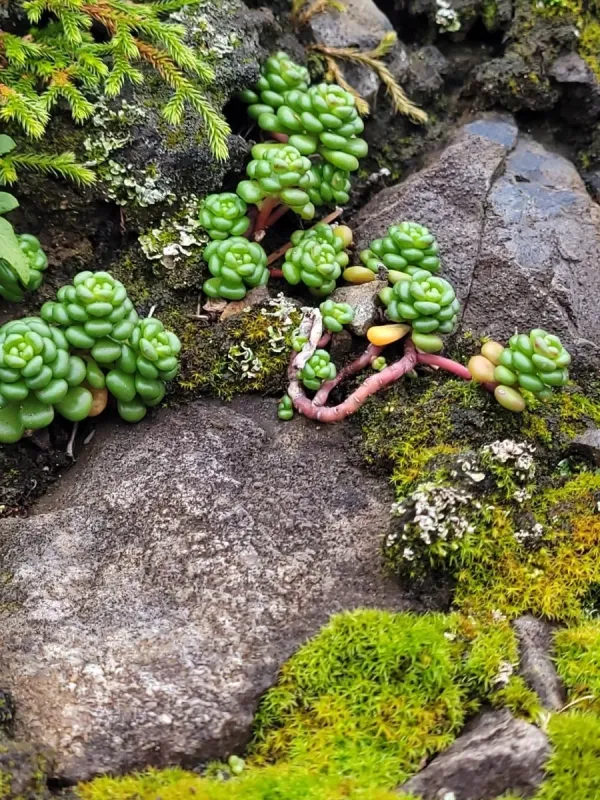
Botanically, Sedum oreganum is characterized by its glossy, spatula-shaped leaves that form dense, mat-like ground covers rarely exceeding 10 cm in height. During the flowering season, it produces small, bright yellow star-shaped flowers that contrast beautifully with the succulent foliage.
Economically, it is valued as an essential component in xeriscaping and sustainable landscaping. It is frequently used for green roof installations, rock gardens, and as a low-maintenance groundcover that effectively prevents soil erosion and suppresses weed growth.
Main diseases and pests
The primary threat to the health of Oregon stonecrop is excessive moisture, particularly during the winter months. Poor drainage leads to fungal pathogens attacking the root system, which can result in the rapid loss of established patches if left unchecked.
Pests are generally not a major concern, but occasional infestations of mealybugs or aphids can occur in stressed plants. Maintaining proper airflow and adhering to appropriate watering schedules are the best preventative measures to ensure a healthy and thriving plantation.