
Sedum obtusatum
Sedum obtusatum
Description
Growing requirements
Sedum obtusatum is a perennial succulent plant belonging to the Crassulaceae family. Native to the mountainous regions of California, this species is well-adapted to surviving in harsh, rocky environments with limited soil resources.
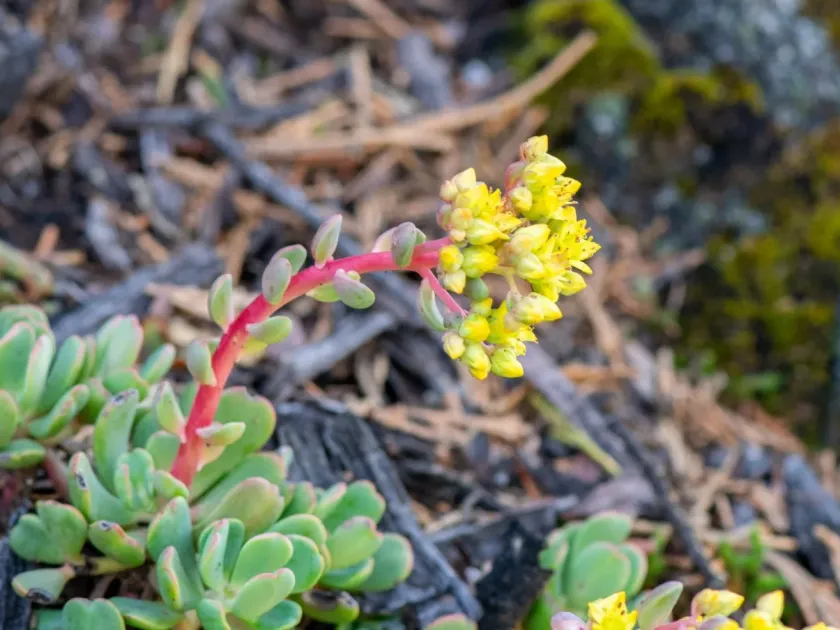
The plant is characterized by its fleshy, spoon-shaped leaves arranged in tight, aesthetic rosettes. These rosettes often display vibrant shifts in color from deep green to rich reddish-bronze depending on sun exposure and seasonal temperatures.
Optimal growth requires a substrate with excellent drainage, as the roots are highly susceptible to rot in stagnant moisture. Planting in full sun is crucial to ensure the plants maintain their compact form and intense coloration.
This species is exceptionally drought-tolerant, making it an excellent candidate for xeriscaping or gardening in arid climates. It thrives in poor, gritty soils that would be unsuitable for most conventional agricultural crops.
In landscaping, Sedum obtusatum is primarily used for rock gardens, stone walls, and as a groundcover to prevent soil erosion. Its low-growing habit and ability to spread make it a practical and low-maintenance choice for gardeners.
Main diseases and pests
The primary threat to the health of Sedum obtusatum is overwatering, which frequently leads to crown and root rot. Proper drainage systems, such as incorporating grit or sand into the soil, are essential preventive measures.
Mealybugs are the most common pests that infest these succulents, hiding within the tight crevices of the rosettes. Regular monitoring and the application of insecticidal soaps can manage these infestations effectively.
Root mealybugs can also pose a serious problem by attacking the subterranean parts of the plant. If infestation occurs, repotting the plant in fresh, sterile substrate is often necessary to save the specimen.
Slugs and snails may cause mechanical damage to the leaves, especially during humid or rainy weather conditions. Using physical barriers or copper tape around planting sites can discourage these pests from attacking.
Fungal diseases, such as botrytis, may emerge if there is insufficient air circulation around the plants. Ensuring proper spacing between individual rosettes helps to maintain a healthy microclimate and prevents infection spread.