
Mexican stonecrop
Sedum mexicanum
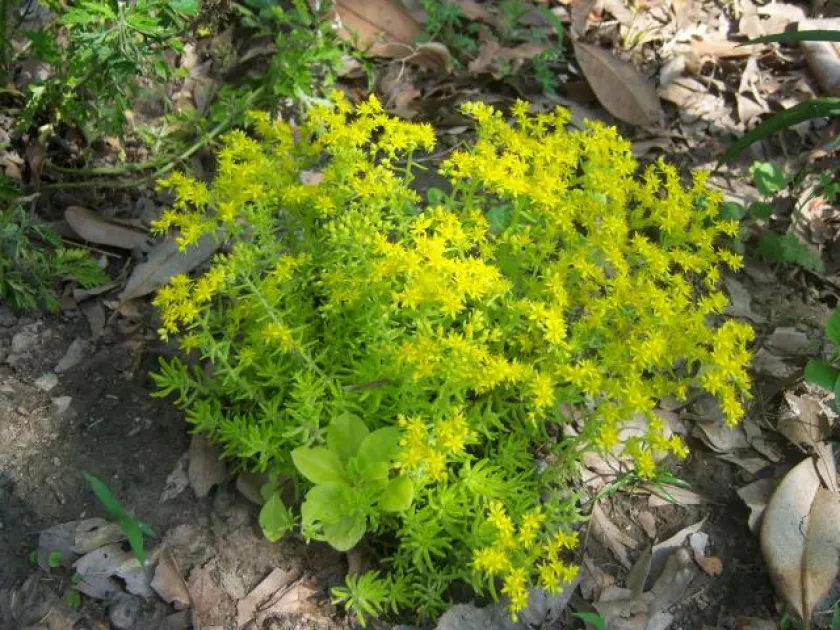
Description
Sowing dates
Mexican stonecrop, a member of the Crassulaceae family, is predominantly propagated through vegetative means, such as stem cuttings, to ensure genetic consistency.
While the plant can produce seeds, vegetative propagation is significantly more efficient and reliable for both professional nurseries and home gardeners.
Cuttings should be taken during the active growing season, ideally in late spring or early summer, when the plant has sufficient stored energy for root development.
The cuttings are placed in a porous, well-draining medium composed of sand and perlite to prevent the base of the stem from rotting before roots emerge.
Once established, the young plants can be transplanted into their permanent location, maintaining a spacing of approximately 20 centimeters to allow for spread.
Growing requirements
This species thrives in bright, direct sunlight, which is essential for maintaining its compact growth habit and vibrant lime-green coloration.
Soil requirements are minimal, but the substrate must provide excellent drainage, as the plant is highly susceptible to root rot in waterlogged conditions.
It prefers a moderate climate and performs best in temperatures ranging from 15 to 25 degrees Celsius, showing limited cold hardiness in frost-prone regions.
Watering should be deep but infrequent, allowing the soil to dry out completely between waterings to mimic the natural arid conditions of its origin.
Proper air circulation is crucial to prevent fungal infections, especially in humid environments where moisture tends to linger on the fleshy leaves.
Yield
As a horticultural crop, Mexican stonecrop is highly valued for its performance as a drought-tolerant ground cover in rock gardens and landscapes.
It provides rapid coverage of bare soil, which helps in controlling weeds and protecting the ground surface from erosion due to wind or water.
The plant's trailing nature makes it an excellent candidate for hanging baskets, where it provides a cascading effect that remains attractive throughout the season.
In green roof projects, Sedum mexicanum is favored for its ability to survive with minimal maintenance while providing a layer of cooling insulation.
Productivity is measured by the density and vigor of the foliage mat, which can be harvested or trimmed to encourage thicker growth across the planting site.
Main diseases and pests
The primary threats to this succulent are fungal pathogens, specifically those causing root and stem rot, which proliferate under damp or overwatered conditions.
Pests such as aphids and mealybugs frequently target the soft tissues of the succulent, causing stunted growth and physical damage to the leaves.
Management of these threats involves careful monitoring of the moisture levels and the prompt application of appropriate insecticidal treatments if infestation occurs.
To reduce disease risk, it is recommended to keep the foliage dry and ensure that the growing site is free from stagnant water or debris.
In cases of severe infestation, affected parts of the plant should be pruned away to stop the spread of pests and maintain the health of the colony.
Harvesting
Harvesting for propagation involves selectively cutting healthy stems, which promotes the plant's natural branching and increases its overall density.
Sanitation is key during the harvesting process; all cutting tools should be sterilized to prevent the accidental transfer of pathogens between plants.
Cuttings are often left in a shaded, dry area for a day or two to allow the cut end to callous over, which significantly improves success rates during rooting.
For ornamental maintenance, harvesting excess growth during the late season helps to shape the plant and prevent it from becoming overly woody or sparse.
The harvested material is versatile and can be used for immediate replanting or shared as a propagation source for new decorative projects.