
Sedum magellense
Sedum magellense
Description
Growing requirements
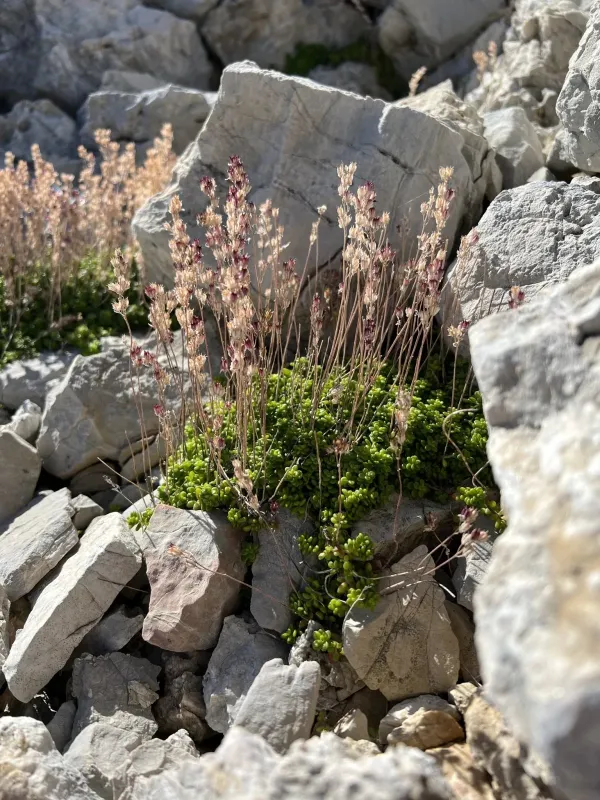
Sedum magellense is a perennial succulent plant belonging to the Crassulaceae family. It is a low-growing species known for its compact habit and its ability to thrive in harsh environments, forming dense carpets of succulent leaves.
The plant originates from the mountainous regions of Europe, particularly the Apennines. Due to its evolutionary adaptation to rocky slopes and high altitudes, it has developed significant resilience to poor soil conditions and extreme temperature fluctuations.
Optimal growth requires well-drained, sandy, or rocky soil. The plant does not tolerate waterlogging, which makes the choice of substrate critical for cultivation. It is highly recommended to include coarse materials like grit or gravel to facilitate drainage.
As a sun-loving plant, it requires full sun exposure to maintain its characteristic morphology. Insufficient lighting leads to etiolation, where the stems stretch and the plant loses its dense, attractive ground-covering appearance.
It is a highly drought-tolerant species. In an agronomic context, supplemental watering is only necessary during the establishment phase or extreme heat waves. It exhibits a high degree of cold hardiness, making it suitable for temperate climates.
Main diseases and pests
The most common threat to Sedum magellense is fungal infection, particularly root rot, triggered by poor soil drainage and excess moisture. These pathogens thrive in stagnant water, rapidly destroying the succulent tissues of the plant.
Pests such as slugs and snails may target the fleshy foliage, especially in damp conditions. While the plant is generally pest-resistant, these mollusks can cause significant visual damage and create entry points for secondary bacterial infections.
Effective management includes maintaining a clean growing area and ensuring that no debris accumulates around the plants. Proper air circulation is vital for preventing the development of mold and fungus on the foliage.
Chemical control should be avoided whenever possible, favoring preventative measures such as adjusting the soil structure to enhance drainage. Monitoring the moisture levels of the soil is the most effective way to prevent the onset of diseases.
Overall, Sedum magellense is considered a low-maintenance crop. When the fundamental requirements of drainage and sunlight are met, the plant remains free of major pests and diseases throughout its growing cycle.