
Lydian stonecrop
Sedum lydium
Description
Sowing dates
Lydian stonecrop is primarily propagated through vegetative methods, as the tiny seeds require very specific conditions to germinate successfully. The most favorable period for dividing mats and taking stem cuttings is in spring and early summer, specifically from April through June.
For planting, select areas with loose, well-draining soil to prevent moisture from pooling around the root system. Cuttings root easily when placed directly into prepared garden soil, provided they receive light watering and temperatures remain above 15 degrees Celsius.
If starting from seeds, sow them in trays during early spring without burying them deeply; a light dusting of sand is sufficient to keep them in place. Cover the containers with plastic to maintain high humidity until the seedlings emerge.
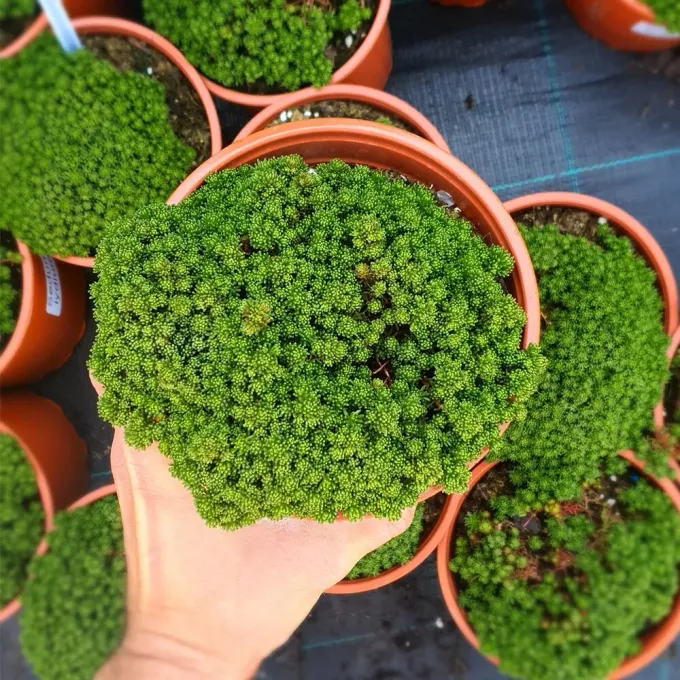
The plant exhibits rapid growth, quickly filling in gaps to form a dense, decorative carpet. When planting on a permanent site, space individual plants approximately 15 to 20 centimeters apart to allow them enough room to spread and establish a uniform cover.
In commercial nursery production, using pre-grown cell-pack plugs is the standard for rapid landscaping. This method ensures high survival rates and provides instant coverage for large areas, minimizing the time needed for the plants to fully establish.
Growing requirements
Lydian stonecrop belongs to the Crassulaceae family and is native to the rocky regions of Turkey and Asia Minor. It is highly adapted to poor, sandy, or stony substrates that have a neutral to slightly alkaline pH, mirroring its natural mountain habitat.
The primary requirement for optimal growth is full sun exposure. In shaded locations, the stems tend to stretch, resulting in a loss of the plant's characteristic compact habit and vibrant reddish-green color, which are key to its aesthetic appeal.
As a true succulent, this species is extremely drought-tolerant, storing water within its fleshy, cylindrical leaves. While it thrives in dry conditions, occasional light watering during intense summer heat helps maintain its vigor and prevents premature browning.
This species shows good winter hardiness in temperate climates, though it appreciates protection during severe winters with little snow cover. Excellent drainage is essential during the thaw in early spring to prevent the roots from rotting in saturated soil.
Maintenance is minimal because the plant does not require high levels of fertilization. Excessive nitrogen intake results in soft, succulent growth that is more susceptible to disease and winter damage, so a single light application of balanced fertilizer in early spring is sufficient.
Main diseases and pests
Excessive moisture is the biggest threat to Lydian stonecrop, as waterlogged soil frequently leads to root and stem rot. If soft, discolored patches appear, they should be removed immediately to prevent the infection from spreading through the colony.
Slugs and snails are the most common pests, as they feed on the succulent leaves, particularly during damp or rainy periods. To protect the plants, use iron phosphate-based bait or create physical barriers around the planting area to deter them.
Occasional infestations of mealybugs may occur, which sap the vitality of the plant. If a localized outbreak is spotted, treat the affected area with an appropriate systemic insecticide to ensure the health of the entire mat is preserved.
In the first few months after planting, weeds are the primary competition for resources. Since Lydian stonecrop establishes a tight mat over time, regular weeding is necessary only in the early stages to ensure the stonecrop dominates the space successfully.
Good air circulation and well-draining soil are the best preventative measures against most pathogens. By ensuring the plants are not crowded and the site has adequate drainage, gardeners can avoid most issues without the need for intensive chemical treatments.