
Hakone stonecrop
Sedum hakonense
Description
Growing requirements
Hakone stonecrop (Sedum hakonense) is a perennial succulent belonging to the Crassulaceae family. It is native to the rocky slopes of Japan, which has endowed it with remarkable endurance and adaptability to harsh environmental conditions.
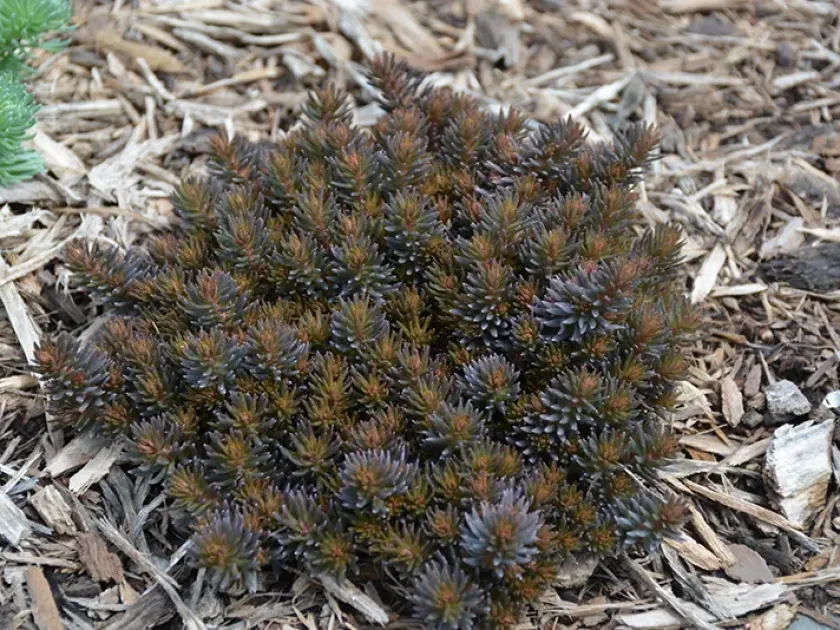
Botanically, it is characterized by its fleshy, trailing foliage that often shifts in color from green to bronze or deep red under full sun exposure. The plant develops dense, mat-forming habits, making it an excellent groundcover.
The primary soil requirement for this crop is exceptional drainage. It thrives in gritty, sandy, or rocky soil mixes where water cannot accumulate near the roots, as moisture retention is the most critical factor for plant health.
Climatically, it is a hardy plant capable of surviving cold winters and intense summer heat. It performs best in full sun, which maintains its compact growth form and vibrant leaf coloration throughout the growing season.
In landscaping, it is highly valued for rock gardens, stone walls, and as a component for extensive green roofs. Its ability to tolerate wind and low nutrient levels makes it an essential species for sustainable, low-maintenance green spaces.
Main diseases and pests
The main threat to the health of Hakone stonecrop is root rot, triggered by waterlogged conditions or poor air circulation. Overwatering or heavy, clay-rich soil is the most common cause of fungal colonization in the root zone.
Common pests include aphids, which may cluster on young, tender growth during the spring. Slugs and snails can also present a significant problem in humid garden settings, causing damage to the succulent leaves.
Integrated pest management strategies should focus on maintaining adequate spacing and ensuring the foliage remains dry. Fungicides are rarely needed if proper drainage and sun exposure are provided consistently.
Weed management is vital during the initial establishment period to ensure the succulent has access to light and nutrients. Once the mat matures, it generally becomes robust enough to outcompete most common garden weeds.
Regular monitoring for signs of wilt or discoloration is recommended to detect stress early. Prompt removal of damaged sections can prevent the spread of localized infections to the rest of the planting mat.