
Sedum grisebachii
Sedum grisebachii
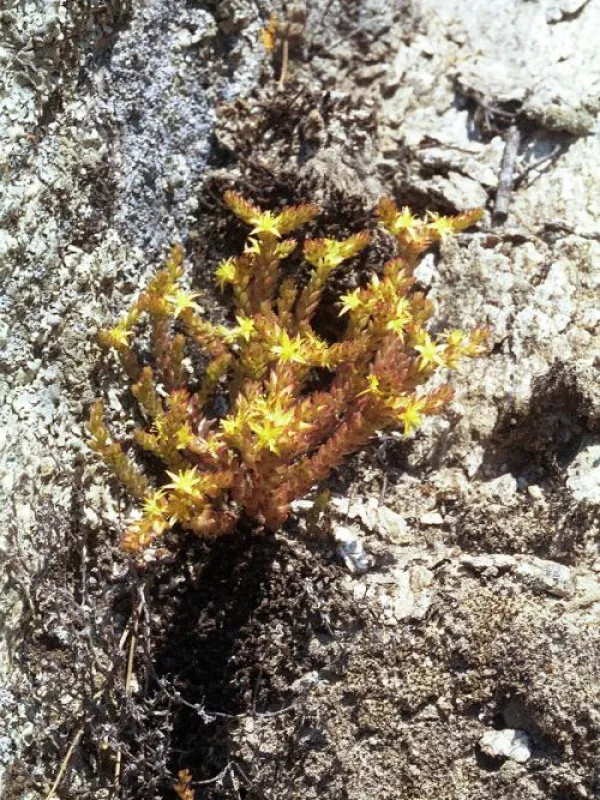
Description
Growing requirements
Sedum grisebachii is a perennial herbaceous plant belonging to the Crassulaceae family. Native to the Balkan mountains, this species is well-adapted to rocky crevices and high-altitude habitats where nutrients are scarce.
The plant is characterized by its prostrate habit, forming compact mats of fleshy leaves. These leaves act as water storage organs, allowing the plant to thrive in arid conditions where other vegetation might struggle to survive.
To cultivate this species successfully, one must provide full sun exposure. Sedum grisebachii requires high light intensity to maintain its compact growth form and to promote vibrant leaf coloration and flowering.
Soil requirements are quite specific: the substrate must be extremely well-draining, such as sandy or gravelly soil mixes. The plant is intolerant of waterlogged soil, which can quickly lead to root rot and death.
In landscaping, this Sedum is highly valued for its ability to cover large areas of rocky ground. It is an excellent choice for xeriscaping, green roofs, and dry gardens where irrigation is minimal or absent.
Main diseases and pests
The most significant threat to the health of Sedum grisebachii is excessive soil moisture. During winter, standing water around the crown of the plant is likely to cause fungal pathogens to invade the tissues.
Common pests include aphids and mealybugs, which tend to infest the soft new growth. These pests can be managed by using insecticidal soaps or systemic treatments that are appropriate for succulent plant varieties.
Root-knot nematodes can also pose a serious risk, causing stunted growth and poor health. Once established in the soil, nematodes are difficult to eradicate, emphasizing the need for clean growing media.
Snails and slugs can cause significant physical damage to the leaves, especially during humid, rainy seasons. Using physical barriers or bait traps is standard procedure for protecting the integrity of the plant foliage.
Botrytis, or gray mold, can occur if the humidity levels around the plants are consistently too high. Improving airflow and avoiding overhead watering are critical cultural practices for disease prevention.