
Glaucous stonecrop
Sedum glaucophyllum
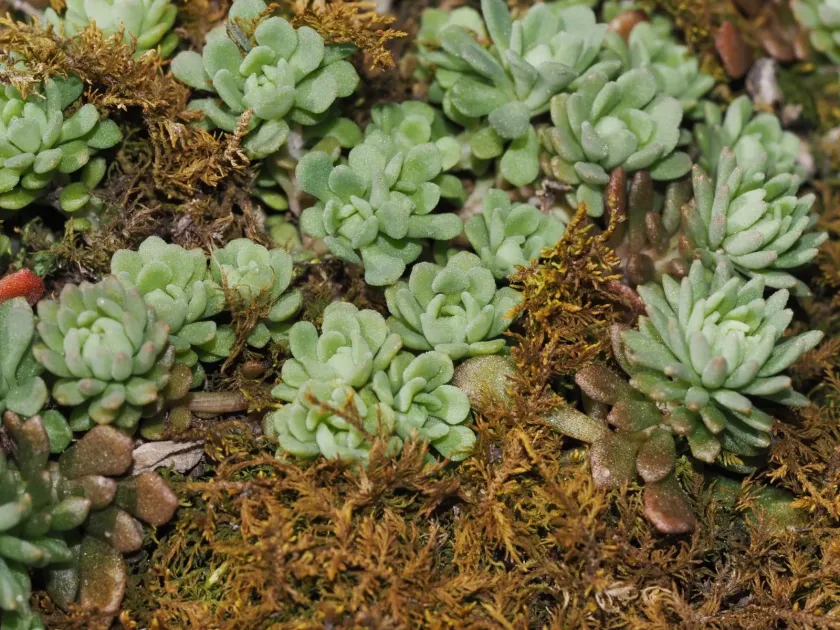
Description
Growing requirements
Glaucous stonecrop (Sedum glaucophyllum) is a perennial succulent plant belonging to the Crassulaceae family. It is widely recognized for its low-growing, mat-forming habit and its ability to thrive in challenging, rocky environments.
Native to the Appalachian Mountains in North America, this species has evolved to withstand low-nutrient conditions and sparse moisture. In agricultural or horticultural settings, it is valued as an ornamental ground cover for rock gardens and green roofs.
The plant requires full sun to partial shade for healthy development. Direct sunlight is crucial for maintaining the plant's characteristic glaucous blue-green color and preventing the stems from becoming leggy or etiolated.
Regarding soil requirements, Sedum glaucophyllum demands excellent drainage. It performs best in gritty, sandy, or rocky soil mixes. Heavy, clay-based soils that hold water for extended periods are unsuitable and often lead to plant decline.
This species is highly drought-tolerant, utilizing its thick, succulent leaves to store water during arid conditions. It is also hardy in various temperate climates, showing significant resilience to temperature fluctuations.
Main diseases and pests
The primary threat to the glaucous stonecrop is root rot caused by poor soil drainage or excessive irrigation. When the substrate remains waterlogged, the roots suffocate and decay, causing the entire clump to perish rapidly.
Mealybugs are the most common insect pests that infest the foliage of this stonecrop. They feed on plant sap and can weaken the succulent, especially if the infestation remains undetected for a long duration.
Aphids can occasionally cluster on the growing tips during the spring months. While the damage is usually cosmetic, severe infestations may stunt the growth of young rosettes and require targeted treatment.
Slugs and snails present a risk to the fleshy leaves, especially in humid environments. The use of crushed stone or gravel as mulch around the plants acts as a physical barrier that helps mitigate this pest pressure.
Fungal pathogens such as leaf spot or rust may occur if there is inadequate air circulation around the plants. Proper spacing and avoiding overhead irrigation are essential cultural practices for preventing these diseases.