
Sedum confusum
Sedum confusum
Description
Growing requirements
Sedum confusum is a perennial succulent species belonging to the Crassulaceae family. Originally native to the mountainous regions of Mexico, this plant has gained recognition as a versatile ornamental crop due to its unique architectural growth form and adaptability.
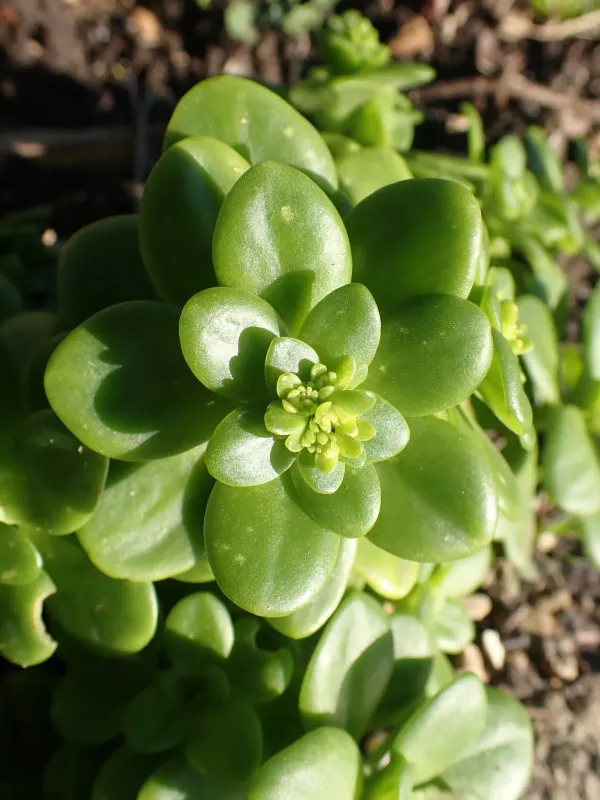
The plant features rosettes of fleshy, emerald-green leaves and exhibits a creeping growth habit. It thrives in well-draining, gritty soils that mimic its natural rocky habitat. Proper drainage is the most critical factor in successful cultivation.
Sunlight requirements are high for this species. Full exposure to direct sunlight is necessary to maintain the plant's characteristic compact rosettes and vibrant coloration. Insufficient light leads to etiolation, where stems stretch and lose their structural integrity.
Regarding climate, the plant prefers arid to semi-arid conditions. It demonstrates significant drought resistance, storing water within its specialized tissues to endure long dry spells. It is not frost-hardy and should be protected during cold winter months.
Agrotechnical practices involve very sparse irrigation. Watering should only occur when the substrate has dried out completely. Over-watering is the primary cause of failure, leading to physiological stress and subsequent decline in plant health.
Main diseases and pests
The most significant threat to Sedum confusum is fungal pathogens resulting from waterlogged soil. Root rot and stem rot are common occurrences, often appearing suddenly when moisture levels remain too high for an extended duration.
Mealybugs represent a major pest concern, particularly in indoor or greenhouse environments. These insects thrive in the compact leaf rosettes, making them difficult to reach, and their feeding habits weaken the plant's overall vigor significantly.
Aphids can infest new growth during the spring, causing stunted development and distorted leaves. Regular monitoring and the application of mild, soap-based insecticidal treatments are typically sufficient to control minor outbreaks.
Nematodes are another potential risk factor that affects the root zone. Infested plants may show a gradual decrease in growth rate, yellowing leaves, and a general inability to take up nutrients effectively, even with optimal soil moisture.
To minimize disease pressure, maintain excellent airflow and avoid overhead watering. Utilizing sterilized substrate when propagating via cuttings is essential to prevent the transmission of soil-borne pathogens from the start of the crop's lifecycle.