
Sedum clavatum
Sedum clavatum
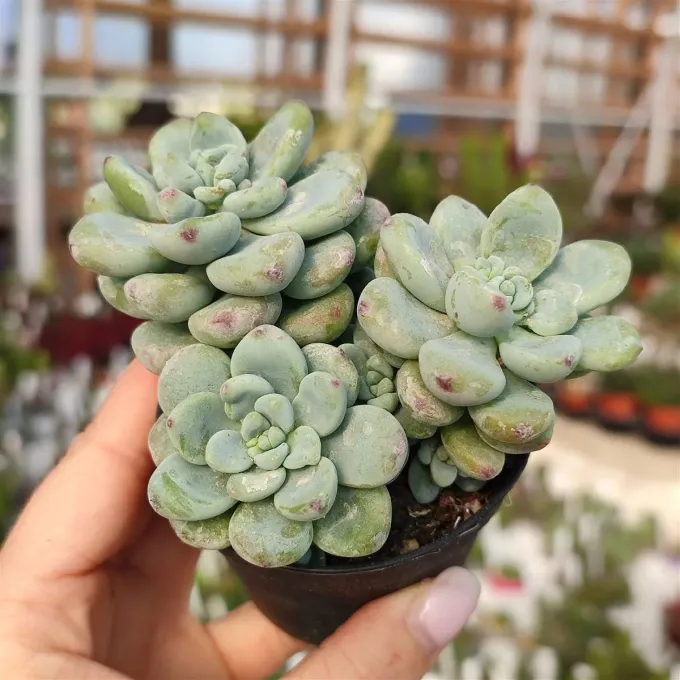
Description
Growing requirements
Sedum clavatum is a perennial succulent plant belonging to the Crassulaceae family. It is widely recognized for its rosettes of fleshy, club-shaped leaves which often exhibit a pale, glaucous coating.
The plant originates from the mountainous regions of Mexico. It is naturally adapted to harsh, rocky environments with intense light, requiring well-drained substrate to mirror these native conditions.
Successful cultivation relies on appropriate soil composition. A mix consisting of standard succulent potting soil, pumice, and coarse sand is ideal to ensure optimal drainage and root aeration.
This species requires high light intensity to maintain its characteristic compact growth habit. Exposure to full or partial sun is necessary to prevent the plant from becoming "leggy" and losing its distinct aesthetic qualities.
Watering requirements are strictly seasonal. During the active growing period, water only when the soil has completely dried out. In the winter dormancy period, watering should be significantly reduced or suspended to prevent root rot.
Main diseases and pests
The primary threat to Sedum clavatum is excessive moisture, which creates an environment conducive to root and stem rot. Pathogenic fungi thrive in waterlogged soil, quickly damaging the succulent tissues.
Mealybugs are the most common pests affecting this species. They typically hide within the tight spaces of the leaf rosettes, making them difficult to detect and treat without specialized systemic insecticides.
Poor ventilation combined with high humidity can lead to fungal infections such as botrytis. To mitigate this risk, it is essential to ensure adequate airflow around the plants, especially in greenhouses or indoor settings.
Care must be taken when applying chemical treatments. The natural waxy cuticle of the leaves is delicate; heavy-handed spraying or contact with harsh chemicals can permanently mar the plant's appearance.
Regular monitoring is the best defensive strategy. Early detection of pest infestations or symptoms of stress allows for targeted management and ensures the continued health of the succulent collection.