
Sedum cepaea
Sedum cepaea
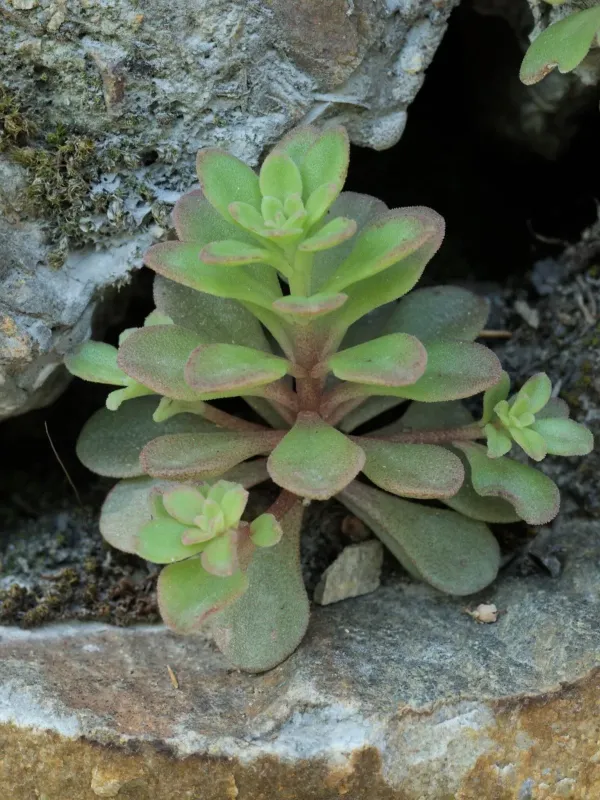
Description
Sowing dates
Sedum cepaea, belonging to the Crassulaceae family, is an annual succulent herb. The plant naturally reproduces through seeds, which are dispersed effectively in its native Mediterranean habitats.
For agricultural or garden purposes, seeds should be sown in early spring. Due to their tiny size, they must be scattered on the surface of a fine, well-prepared seedbed without burying them deep in the soil.
Light is essential for the germination of Sedum cepaea seeds. Providing a light misting instead of heavy watering helps maintain necessary moisture levels without disturbing the seeds.
If starting seeds indoors, use a well-draining succulent mix to ensure the seedlings do not succumb to dampening-off, which is a common issue for succulent species at the early growth stage.
Thinning the seedlings is recommended if sown too densely to ensure each plant has enough space to develop its characteristic fleshy foliage and reach full maturity.
Growing requirements
This species thrives in sunny locations with well-drained, sandy, or rocky soils. It is highly adapted to environments where water availability is inconsistent throughout the growing season.
Sedum cepaea prefers neutral to slightly alkaline soil pH. Improving soil structure with grit or perlite is essential if the existing site consists of heavy clay that holds moisture for too long.
The plant is native to the Mediterranean region, which defines its tolerance for high temperatures and sunlight. It acts as a natural water reservoir due to its succulent leaves and stems.
Fertilization should be kept to a minimum. Excess nutrients, particularly nitrogen, will lead to weak, elongated stems that lose their aesthetic appeal and structural integrity.
Proper air circulation is a key requirement to prevent fungal growth. Planting in open areas with a natural breeze ensures the leaves dry out quickly after precipitation.
Main diseases and pests
Root and stem rot caused by excessive moisture are the primary threats to Sedum cepaea. Ensuring a sharp drainage system is the most effective preventative measure against these pathogens.
Pests such as aphids may colonize the inflorescences, sucking the sap and weakening the plant. Regular monitoring is necessary during the flowering period to catch infestations early.
Gastropods like slugs and snails are highly attracted to the succulent foliage. They can cause significant damage to young plants, often requiring manual removal or barrier protection methods.
Fungal leaf spot diseases can occur during prolonged periods of high humidity. Removing affected leaves and improving ventilation usually helps control the spread of the infection.
Maintaining a weed-free environment is critical, as weeds compete for light and nutrients while also increasing humidity around the base of the succulent plants.