
Blue stonecrop
Sedum caeruleum
Description
Sowing dates
Blue stonecrop is a distinct annual member of the Crassulaceae family, requiring careful attention to sowing timing to ensure successful completion of its life cycle.
Sowing should be done in late spring once the danger of frost has passed, as the seeds require warmth to germinate effectively in the open garden soil.
For gardeners in cooler regions, starting seeds indoors in early March using a very light, well-draining sandy mix is the best practice for earlier blooming.
The seeds are exceptionally small and should be sown on the surface of the growing medium, pressed gently, and kept barely moist until the seedlings emerge.
Once seedlings have developed their true leaves, they should be hardened off and spaced at least 15 centimeters apart to allow for proper airflow.
Growing requirements
Originating from the Mediterranean region, Sedum caeruleum thrives in conditions that mimic its natural stony, sun-drenched habitat.
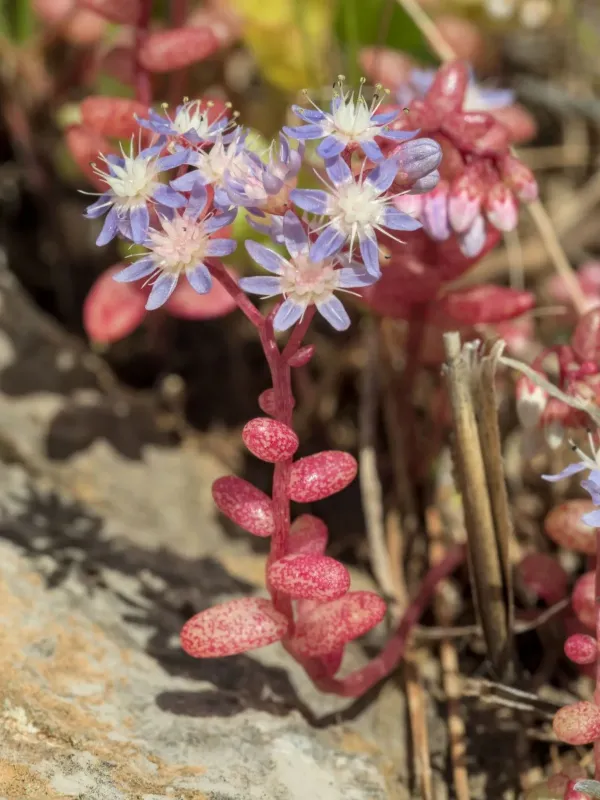
It demands full sun exposure throughout the day to develop its unique sky-blue foliage and star-shaped flowers that appear in late summer.
The soil must be lean and exceptionally well-draining; heavy or nutrient-rich soils will cause the plant to lose its compact, succulent habit.
It is highly drought-tolerant and requires minimal watering, as excess moisture is the most common cause of failure in cultivating this specific species.
No fertilization is typically required, as these plants are adapted to growing in thin, rocky substrates where nutrient levels are naturally very low.
Main diseases and pests
The most significant threat to the Blue stonecrop is root rot, triggered by overwatering or poorly draining soil conditions that trap moisture around the base.
Fungal issues, including various blights, can occur in stagnant, humid environments, emphasizing the need for open, breezy planting sites.
Aphids are the primary insect pests, capable of clustering on the tips of the succulent stems and sucking the plant's juices, causing stunted growth.
Gastropods like slugs and snails may graze on the young foliage during wet weather, making it necessary to keep the area around the plants clear of debris.
Maintaining a dry, sunny environment is the most effective way to prevent these threats and keep the plants healthy throughout their growing season.