
Sedum andegavense
Sedum andegavense
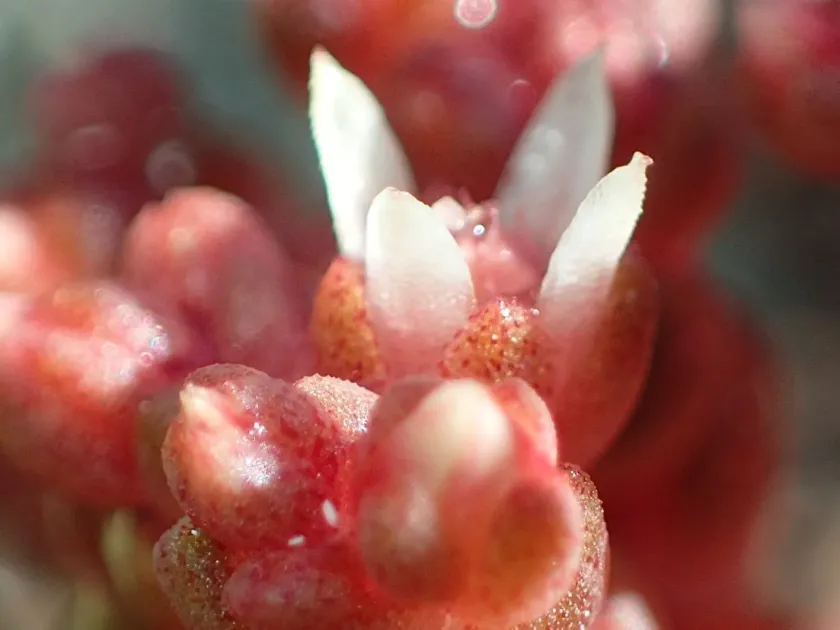
Description
Sowing dates
Sedum andegavense is a unique annual species belonging to the Crassulaceae family, requiring specific conditions for successful propagation by seed.
Sowing should be performed during the spring season when temperatures are consistently warm, usually between 16 and 20 degrees Celsius.
Since the seeds are minute, they should be sown on the surface of a fine, well-draining substrate and lightly pressed to ensure good soil contact.
Maintaining a constant, light level of moisture is essential during the germination phase to ensure the tiny seeds do not desiccate prematurely.
Once seedlings have reached the two-leaf stage, they require careful monitoring to prevent overcrowding and ensure adequate airflow for development.
Growing requirements
This species thrives in well-drained, nutrient-poor soil, preferably with a high mineral content such as gravel or sandy loam compositions.
Sedum andegavense is highly heliophilic and must be positioned in full sun to maintain its compact growth habit and natural coloration.
Water requirements are low, as the plant exhibits typical succulent adaptations to conserve moisture during periods of limited rainfall.
The plant demonstrates excellent performance in arid and semi-arid environments, provided it is not subjected to prolonged stagnant moisture.
Good soil aeration is critical; heavy clay soils should be amended with organic and inorganic materials to prevent root suffocation and decay.
Main diseases and pests
The primary concern for this crop is root rot, induced by excessive water retention and poorly drained soil conditions during the growing cycle.
Fungal infections, including botrytis and powdery mildew, may occur if the plants are grown in high-humidity areas with insufficient ventilation.
Sap-sucking insects, such as aphids, can occasionally infest young shoots, necessitating prompt intervention to prevent stunted growth.
Soil-borne pathogens represent a significant risk; therefore, sterilization of the growing medium is a recommended best practice for cultivation.
Proper spacing between individuals helps mitigate the spread of pathogens and reduces the likelihood of systemic infection within the plot.