
Tibetan Rhodiola
Rhodiola tibetica
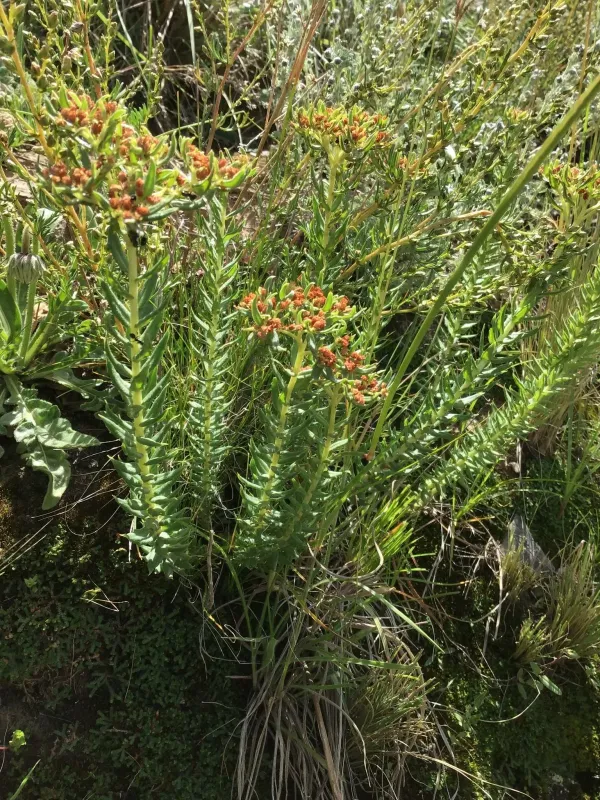
Description
Sowing dates
Tibetan Rhodiola Rhodiola tibetica is a slow-growing perennial plant belonging to the Crassulaceae family. Propagation is primarily achieved through seeds, as the plant demands specific conditions to germinate effectively.
Seeds require a period of cold stratification to break dormancy. Sowing should be performed in late autumn, allowing the seeds to undergo natural winter cycles before sprouting in early spring.
If sown in spring, seeds must be kept in moist, cold conditions for several weeks before planting. Due to their small size, seeds are sown on the surface of a light, well-draining potting mix and covered very lightly.
Seedlings develop slowly, often taking several years to reach a size suitable for transplanting into the field. During this initial stage, competition from weeds must be eliminated to prevent the loss of young plants.
Successful field establishment depends on selecting healthy, vigorous seedlings and providing them with adequate spacing to minimize resource competition during their developmental years.
Growing requirements
As an alpine species, Tibetan Rhodiola thrives in cool, high-altitude climates. It requires regions with significant temperature fluctuations, which are essential for the synthesis of its active phytochemicals.
The soil must be well-aerated, rocky, or sandy with a neutral to slightly alkaline pH. Drainage is the most critical factor; waterlogged soil leads to rapid root decay, which is a major cause of crop failure.
Adequate sunlight is necessary for development, although protection from intense, direct midday sun is recommended, especially in lowland or warmer regions to prevent leaf scorch and soil dehydration.
Water management should be precise. While the plant requires moisture for growth, it is drought-tolerant once established. Over-irrigation is more detrimental than moderate drought during the active growing season.
Balanced potassium and phosphorus fertilization helps strengthen the root system and improves the plant's resistance to frost and environmental stressors during the winter dormancy period.
Main diseases and pests
The main threats to Tibetan Rhodiola include fungal infections like root rot, which are primarily triggered by poor drainage or excessive humidity around the root crown area.
Soil-borne pests, including various larvae, can cause significant damage to the roots. Utilizing crop rotation practices and ensuring soil sanitation before planting are essential preventive measures.
Powdery mildew may occur if planting density is too high, preventing proper airflow around the foliage. Thinning the plants and managing humidity levels are effective strategies to control this fungal issue.
Sap-sucking insects like aphids can stress the plants during dry periods. Biological control agents or specialized organic soap sprays are preferred to maintain the quality of the harvested medicinal raw material.
Continuous site monitoring is vital. Early identification of diseased plants allows for their prompt removal, which prevents the spread of pathogens to the rest of the commercial plantation.
Harvesting
Harvesting Tibetan Rhodiola is the final and most critical stage of production. The roots are the primary source of bioactive compounds, and they are typically ready for harvest after 4 to 5 years of growth.
The harvest is conducted after the growing season when the above-ground biomass has withered, ensuring that the concentration of secondary metabolites in the roots is at its peak.
The roots are carefully excavated, washed, and cleaned of soil debris. It is crucial to perform this step gently to prevent damage to the delicate root structures that contain the active compounds.
Drying is a controlled process carried out in ventilated facilities at moderate temperatures. Avoiding direct sunlight and high heat prevents the chemical degradation of the plant's active ingredients.
Once dried, the raw material should be stored in a cool, dry, and dark environment to maintain its chemical potency and prevent moisture-related quality loss before shipping or processing.