
Rhodiola crenulata
Rhodiola crenulata
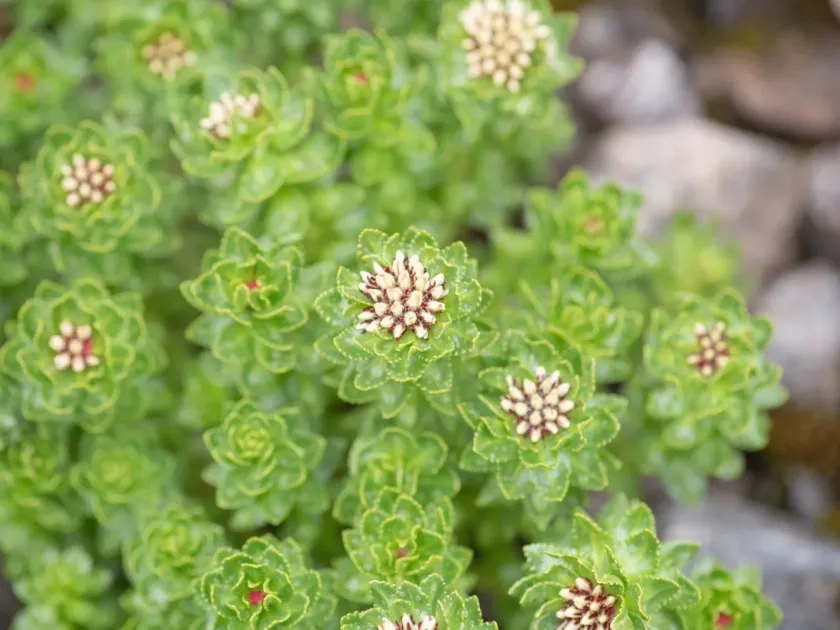
Description
Sowing dates
Rhodiola crenulata is a slow-growing perennial that requires specific propagation methods for successful cultivation. Propagation is primarily done through seeds, which require a cold stratification process to overcome dormancy and ensure uniform germination in the spring.
In field production, seeds are sown in shallow furrows, no deeper than 0.5 cm, as they need light to germinate efficiently. The soil must be kept moist but not waterlogged during the critical germination phase, which can last several weeks.
For more predictable results, nursery-grown seedlings are often used. These are raised in climate-controlled environments for approximately 8 weeks before being transplanted into their permanent field locations during the temperate spring season.
When planting, spacing should be set at approximately 30-40 cm apart. This density is essential to balance the competition for nutrients with the need for sufficient airflow, which prevents the development of fungal diseases in the foliage.
Vegetative propagation via root division is another viable strategy, allowing growers to skip the initial slow-growth stage. Dividing mature rootstocks in the early spring ensures a faster biomass accumulation compared to seed-based propagation.
Growing requirements
As a plant native to high-altitude regions of the Himalayas, Rhodiola crenulata thrives in cool, alpine environments. It requires significant UV exposure and cool nights to synthesize its unique profile of active compounds, particularly salidroside.
The ideal soil for this crop is well-drained, sandy, or rocky, simulating its natural mountain habitat. High levels of organic matter are beneficial, but the soil structure must ensure rapid water runoff to prevent root rot.
The plant is highly sensitive to heat stress. In lowland cultivation areas, growers must implement protective measures such as shade cloth during the hottest hours or mulching to maintain lower soil temperatures in the root zone.
Watering requirements are moderate; the plant is drought-tolerant once established but needs steady moisture for initial growth. Drip irrigation systems are highly recommended to provide precise hydration without soaking the leaves.
Soil pH should remain in the neutral to slightly acidic range. Regular soil testing is necessary to ensure that phosphorus and potassium levels are balanced, as these nutrients are critical for root structure development.
Main diseases and pests
The primary threats to Rhodiola crenulata are fungal pathogens, specifically those causing root and crown rot. These diseases are almost always linked to poor drainage or excessive irrigation, necessitating strict water management.
Wireworms and other soil-dwelling pests are common adversaries that feed on the fleshy roots. Pre-planting soil treatments and biological control methods are preferred over synthetic pesticides to maintain the medicinal quality of the final product.
Foliar diseases, such as leaf spots, can spread rapidly if air circulation is inadequate. Thinning rows and removing debris from the field are essential cultural practices that help mitigate the spread of spores during humid weather.
Monitoring the plantation for signs of chlorosis or stunted growth is vital, as these can be early indicators of subsurface pest activity or nutrient deficiency. Early intervention can save the entire crop cycle.
Adhering to a strict rotation schedule, avoiding fields where other tuberous or root crops were recently grown, is critical for reducing the long-term buildup of soil-borne pathogens.
Harvesting
Harvesting Rhodiola crenulata is a significant operation, typically occurring after 3 to 4 years of growth. By this age, the rootstocks have developed sufficient mass and accumulated high levels of medicinal phenolic compounds.
The extraction process usually takes place in the late autumn, after the plant enters dormancy and the aerial parts have withered. This timing ensures that energy is concentrated in the roots rather than in new leaf growth.
Mechanical harvesting involves lifting the roots with specialized equipment designed to penetrate 20–30 cm deep without causing excessive damage to the delicate root tissues. After extraction, roots must be washed thoroughly to remove all substrate debris.
Post-harvest processing requires rapid, low-temperature drying at 50–60 degrees Celsius. Drying too quickly or at high temperatures will destroy the heat-sensitive pharmacological components, reducing the market value of the batch.
Once dried, the roots must be stored in cool, low-humidity environments to prevent moisture re-absorption. Quality control tests are then performed to certify the levels of key chemical markers before the batch is released for pharmaceutical use.