
Phedimus stoloniferus
Phedimus stoloniferus
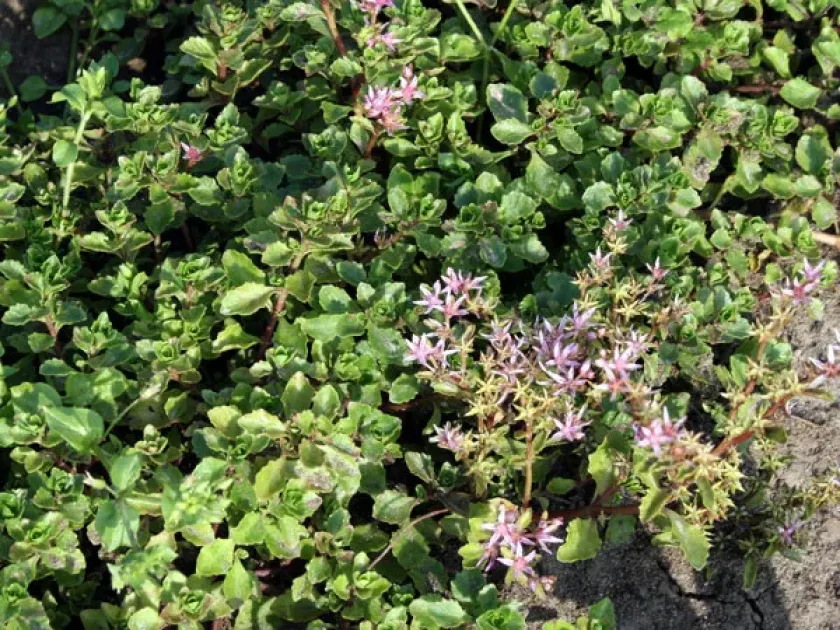
Description
Sowing dates
The propagation of Phedimus stoloniferus is primarily achieved through vegetative methods, which allow for rapid expansion of the ground cover. The ideal time for planting is early spring or early autumn, ensuring the plant has enough time to establish roots before extreme temperatures.
Cuttings can be taken from healthy stems; they root very quickly when placed in loose, moist soil. This makes it an ideal candidate for rock gardens, green roofs, and areas where low-maintenance coverage is required.
Seed propagation is also possible but requires specialized conditions. Seeds should be sown on the surface of fine, well-draining substrate and misted regularly, as they need light and moisture to germinate properly.
For best results when establishing a new planting, the area should be cleared of perennial weeds. Since the plant spreads by stolons, a clean substrate allows the stems to anchor themselves more effectively.
The spacing between plants should be approximately 15 to 20 centimeters, which provides enough room for the creeping stems to cover the soil surface effectively over the course of one growing season.
Growing requirements
Phedimus stoloniferus is a member of the Crassulaceae family and is known for its resilient, succulent nature. It originates from rocky, mountainous habitats, which explains its ability to thrive in thin, infertile soils.
This culture requires full sun to partial shade for optimal health. In full sun, the foliage develops more intense coloration, and the plant maintains a dense, compact growth habit compared to shaded conditions.
Soil requirements are straightforward: the plant demands excellent drainage. Sandy or rocky soil mixes are ideal. If the native soil is heavy clay, the addition of grit or gravel is necessary to prevent stagnant water, which is the primary cause of root issues.
Regarding climate, this species is highly frost-hardy and requires no special winter protection in moderate climates. It handles long periods of drought efficiently by storing water in its thick leaves, requiring minimal irrigation.
Basic care includes periodic weeding to protect young plants and light pruning if the mat grows too thick or spreads beyond designated boundaries. Otherwise, it is a very low-maintenance crop.
Main diseases and pests
The most significant threat to Phedimus stoloniferus is poor drainage, which leads to crown rot and fungal diseases. Maintaining a dry, well-aerated environment around the base of the plant is the best preventive measure.
Aphids can occasionally infest the growing tips during the peak of the season. If the infestation is light, they can be controlled by a simple water jet; in severe cases, biological controls are recommended.
Snails and slugs may feed on the succulent leaves, particularly during periods of high humidity. Keeping the area surrounding the plantings free of debris reduces the hiding spots for these pests.
Root rot is usually indicated by a sudden wilting or discoloration of the stems. If observed, it is recommended to prune away the affected parts and improve soil drainage immediately to save the colony.
By ensuring that the plant is not overly crowded and that it has access to sunlight and airflow, most health threats can be avoided without the need for chemical intervention.