
Obtuse-leaved stonecrop
Phedimus obtusifolius
Description
Growing requirements
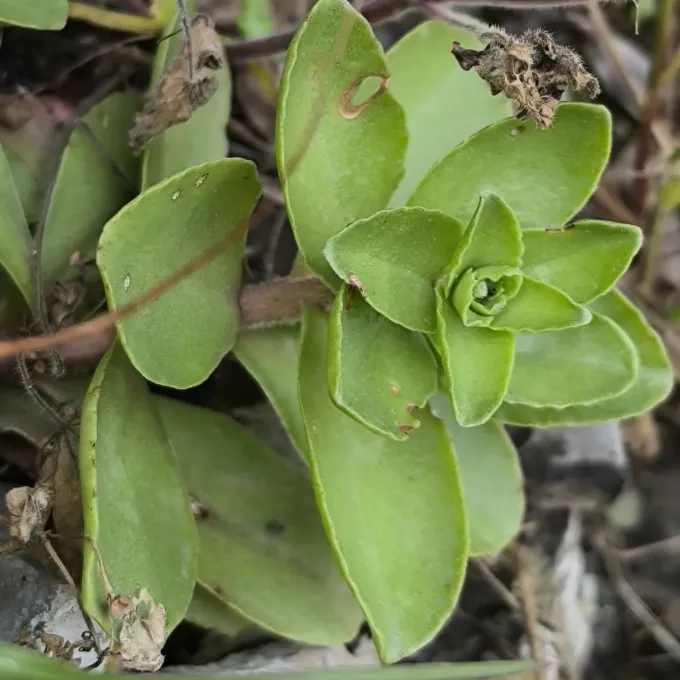
The obtuse-leaved stonecrop (Phedimus obtusifolius) is a perennial succulent belonging to the Crassulaceae family. It is characterized by its prostrate growth habit, forming dense, fleshy mats that effectively cover the soil surface.
Originating from rocky, montane habitats, this plant has evolved to thrive in harsh, nutrient-poor environments. Its biological resilience makes it a popular choice for rock gardens, xeriscaping, and sustainable green roof installations.
The plant requires well-drained, sandy, or rocky soil to flourish. Heavy, water-retaining soils are detrimental to its health, as they often lead to root rot. Providing a substrate with excellent aeration is essential for optimal growth.
Sunlight requirements are high, as Phedimus obtusifolius performs best under full exposure. Its ability to store water in succulent leaves allows it to withstand prolonged drought, which is a key trait for arid-region gardening.
Temperature management is generally straightforward as the species is hardy in temperate climates. However, during the winter and early spring, it is important to prevent water accumulation around the crown to ensure the plant successfully emerges from dormancy.
Main diseases and pests
The primary concern for growers is moisture management. Overwatering or poor drainage frequently leads to fungal pathogens attacking the root system, often resulting in rapid decay of the foliage.
Powdery mildew can occur if the plant is grown in areas with high humidity and insufficient air circulation. Proper spacing between individual plants is necessary to promote airflow and minimize the risk of infection.
Aphids and certain types of beetles represent the main insect pests for stonecrops. These pests feed on the succulent sap and can weaken the plant if left untreated for an extended period.
Nematode infestations can occasionally affect the root system, causing stunted development. Implementing crop rotation or replacing soil in localized patches is a common cultural practice to maintain the health of the planting area.
Regular maintenance, including the removal of dead organic material and monitoring for signs of infestation, is sufficient to keep the crop in good condition throughout the growing season.