
Thick-leaved stonecrop
Petrosedum sediforme
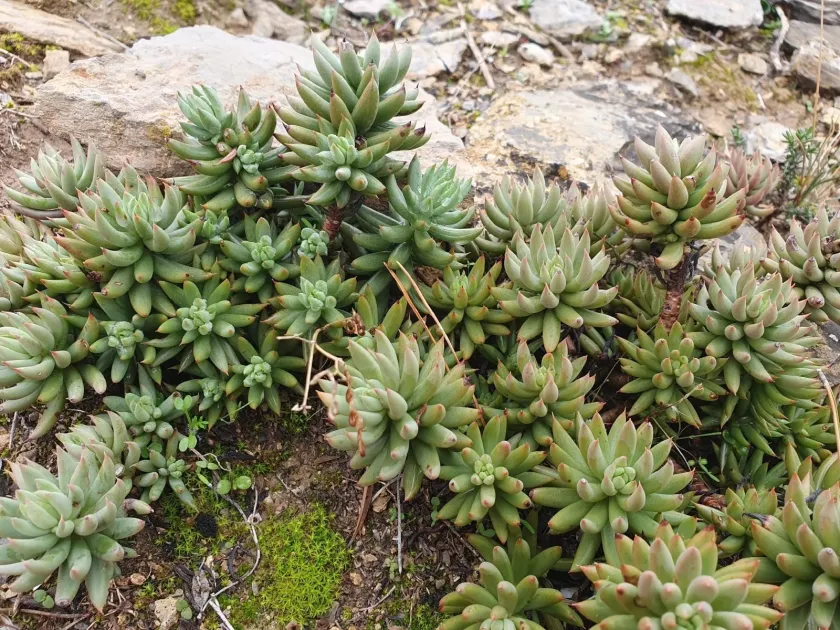
Description
Sowing dates
Petrosedum sediforme, commonly known as thick-leaved stonecrop, is a member of the Crassulaceae family. In agricultural and horticultural practices, the most effective way to propagate this crop is through vegetative methods, such as stem cuttings or division of clumps during the spring season when the plant emerges from dormancy.
For seed propagation, sowing is best performed in late autumn or spring using a well-drained, sandy substrate. The seeds require surface sowing without deep burial, as they need exposure to light for optimal germination under controlled greenhouse conditions.
A critical requirement for successful establishment is preventing excessive moisture during the first few weeks after planting. Temperatures for active growth should be maintained between 18 and 25 degrees Celsius to encourage rapid root development.
This crop exhibits high adaptability to nutrient-poor substrates; therefore, heavy fertilization is generally unnecessary when establishing plantations. Ensuring a loose soil structure with added gravel or coarse sand is sufficient to prevent waterlogging.
Plants should be spaced 20x20 or 30x30 centimeters apart to promote the rapid formation of a dense ground cover, which effectively suppresses weed growth in the target area.
Growing requirements
As a typical succulent, this species is perfectly adapted to Mediterranean-like climates. The primary requirement for successful cultivation is full exposure to sunlight throughout the day to maintain its compact habit.
The plant is highly sensitive to soil aeration levels. It cannot tolerate heavy, clay-based soils that retain moisture, as poor drainage inevitably leads to root rot and decay of the fleshy foliage.
Petrosedum sediforme displays exceptional drought tolerance due to its ability to store water within its succulent leaves. In regions with extremely hot summers, supplemental irrigation is rarely necessary once the root system is established.
The plant is relatively indifferent to soil pH but thrives best in neutral to slightly alkaline substrates. High calcium content in the soil profile often contributes to a more robust and decorative appearance of the foliage.
While the minimum temperature for active growth is approximately 5 to 10 degrees Celsius, the plant is hardy enough to withstand brief frost episodes common in temperate zones, provided the substrate remains well-drained.
Yield
The economic value of this crop is measured not by biological biomass yield in the traditional sense, but by its capacity for surface coverage and the production of propagation materials.
Under intensive cultivation conditions with moderate irrigation, the aerial parts can achieve a growth rate of 10–15 centimeters per season, making it an excellent candidate for rapid anti-erosion soil stabilization.
Harvesting of medicinal or decorative raw material is feasible by the second year after establishment. The plant tolerates shearing very well, allowing for height regulation and the stimulation of thicker branching of the stems.
In landscaping projects, utilizing Petrosedum sediforme reduces maintenance costs, as the crop requires minimal mowing or fertilization throughout its multi-year operational lifespan.
Overall productivity depends significantly on initial planting density: higher density planting achieves maximum surface coverage faster, effectively preventing soil degradation and erosion.
Main diseases and pests
The primary threat to this crop is fungal disease caused by improper water management. Root rots develop rapidly in stagnant water, making strict adherence to drainage protocols the most effective preventive measure.
Common pests include mealybugs and aphids, which feed on the plant's sap during hot, dry weather. In cases of severe infestation, the application of systemic insecticides approved for ornamental crops is recommended.
High humidity may occasionally lead to powdery mildew on the stems. Management involves the use of sulfur- or copper-based fungicides and ensuring adequate airflow through the plantings to reduce humidity levels.
Snails and slugs can damage young succulent shoots during the spring. To protect plantations, mechanical barriers such as gravel mulch or specialized molluscicides are used to minimize feeding damage.
It is important to remember that all chemical treatments should be conducted during early morning or late evening hours to prevent leaf scorching, which can be exacerbated by intense direct solar radiation.