
Petrosedum pruinatum
Petrosedum pruinatum
Description
Growing requirements
Petrosedum pruinatum is a perennial succulent species belonging to the Crassulaceae family. It is native to the Iberian Peninsula, where it thrives in rocky, arid, and exposed environments, demonstrating high adaptability to challenging climatic conditions.
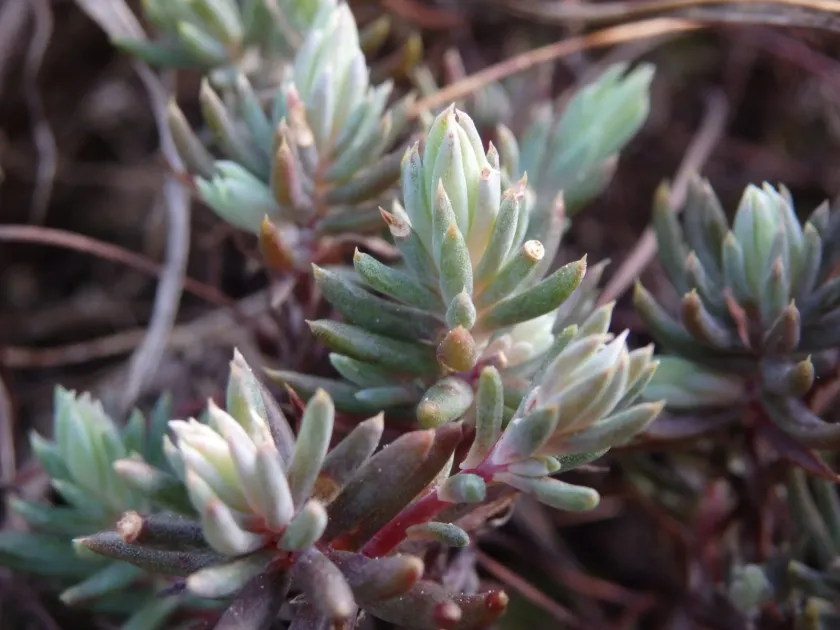
The plant is botanically distinguished by its fleshy, succulent leaves covered with a distinct glaucous bloom. This waxy layer acts as a vital mechanism to prevent water loss and reflect excessive UV radiation, allowing the plant to remain active even during peak summer heat.
To cultivate Petrosedum pruinatum successfully, one must provide a substrate with excellent drainage, such as a sandy or gritty mix. Standard garden soil is usually too moisture-retentive and may cause the roots to rot rapidly if not amended correctly.
This species requires full sun exposure to maintain its compact growth habit and natural coloration. Partial shade or insufficient light causes the stems to stretch and lose their structural integrity, making the plant more vulnerable to physical stress.
In landscape architecture, the plant is primarily used for xeriscaping, rock gardens, and green roofing systems. Its ability to grow in nutrient-poor substrates makes it an environmentally friendly choice for low-maintenance urban greening projects.
Main diseases and pests
The most significant threats to Petrosedum pruinatum are fungal diseases triggered by high humidity and waterlogged soil. Root rot is the leading cause of plant mortality, often developing silently beneath the surface of the soil.
Pests such as mealybugs and aphids are common challenges, as they tend to settle deep within the rosettes. Their feeding causes localized damage, which can serve as an entry point for secondary bacterial infections that spread through the plant tissues.
Management of these threats emphasizes preventative measures: choosing airy planting locations and ensuring the foliage remains dry during irrigation. Removing infected sections early is crucial to prevent the spread to adjacent healthy specimens.
During the dormant season, monitoring for mold or mildew is essential if the plants are kept in containers. Good air circulation is the best defense against these seasonal botanical challenges.
Although the plant is quite hardy, severe infestations by soil-borne nematodes can occur in contaminated substrates. Using sterile, high-quality soil components for propagation and planting is highly recommended for long-term health.