
Globe-bearing Jovibarba
Jovibarba globifera
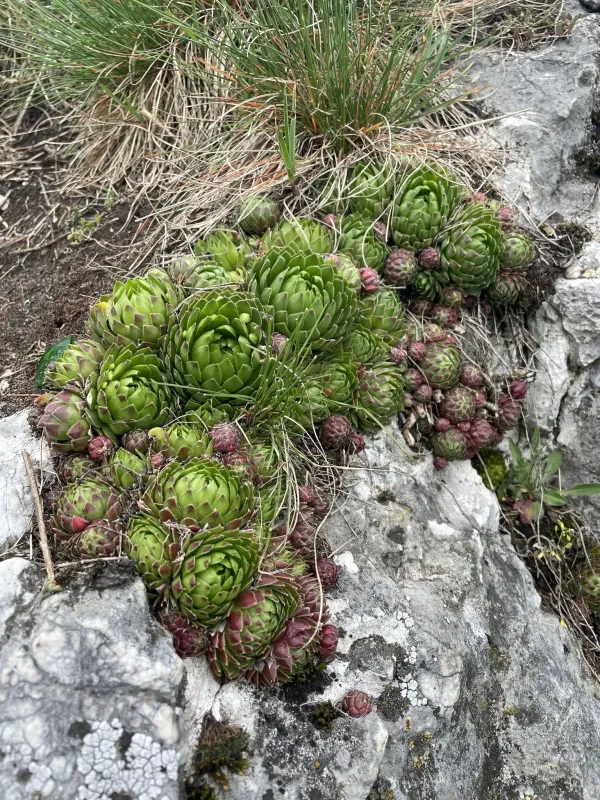
Description
Growing requirements
Jovibarba globifera, commonly known as the globe-bearing jovibarba, belongs to the Crassulaceae family. This succulent is native to the mountain ranges of Central and Eastern Europe, where it thrives in rocky environments and crevices.
The crop is highly adapted to nutrient-poor, stony, or sandy soils, provided they have exceptional drainage. It requires full sun exposure to maintain its characteristic compact rosette structure and vibrant foliage color.
As a drought-tolerant species, it requires minimal irrigation once established. However, the cultivation must prioritize water management, as excessive moisture around the roots can lead to immediate physiological stress and decay.
This succulent displays impressive winter hardiness, making it suitable for year-round outdoor cultivation in temperate zones. It thrives in well-ventilated locations with low air humidity during the dormant season.
In terms of agricultural and horticultural use, Jovibarba globifera is primarily valued for rock gardens, green roofs, and dry stone walls. Its ability to colonize difficult terrains makes it an excellent choice for ornamental ground cover.
Main diseases and pests
The primary threat to the health of the crop is root rot caused by poor soil drainage or excessive water accumulation within the succulent rosettes during the wet season.
Mealybugs are the most common pests that can infest the plant, feeding on cell sap and causing stunted growth if left unmanaged throughout the growing season.
Slugs and snails may occasionally feed on the leaves, especially in damp conditions, which can significantly damage the appearance and vitality of the colony.
Disease prevention involves ensuring a free-draining substrate and spacing plants sufficiently to promote air circulation and quick drying of the foliage after rainfall.
Chemical control should be used sparingly, prioritizing preventative measures such as site selection and soil preparation to keep the plants robust and resistant to potential infections.