
Crassula volkensii
Crassula volkensii
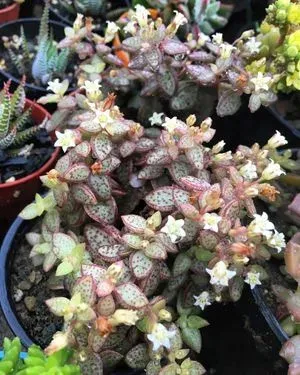
Description
Growing requirements
Crassula volkensii is a perennial succulent species belonging to the Crassulaceae family. It is native to the eastern regions of Africa, typically found in rocky habitats and arid environments.
The plant features succulent, fleshy leaves that serve as water reservoirs, enabling it to endure prolonged dry spells. Its growth habit can vary, often presenting a trailing or bushy structure suitable for decorative pots.
Light requirements are high, yet indirect light is preferable to avoid sunburn. A south or east-facing windowsill with light protection during the hottest hours of the day is generally optimal.
The growing medium must provide excellent drainage. A specialized substrate for succulents, amended with perlite or coarse sand, is recommended to ensure that water does not remain at the root zone.
Temperature management is critical: the plant thrives at temperatures between 20°C and 25°C during the growing season and requires a cooler period of 12°C to 15°C throughout the winter months to stimulate vitality.
Main diseases and pests
Overwatering is the primary threat to Crassula volkensii. Excessive moisture in the soil leads to rapid root decay and stem rot, which can cause the plant to collapse within days.
Common pests include mealybugs and scale insects. These organisms thrive in the nooks between leaves and can be difficult to eliminate once they have established a large colony.
Poor ventilation promotes the development of fungal pathogens. Maintaining adequate airflow around the foliage is essential to prevent mold growth and fungal infections.
Regular maintenance involves checking for signs of stress or pests. If an infection is detected, affected plant parts should be removed immediately to prevent spread.
The use of pesticides should be approached with caution. Always opt for systemic treatments applied to the soil or foliage to target the pests effectively without damaging the succulent tissues.