
Crassula undulata
Crassula undulata
Description
Growing requirements
Crassula undulata is a perennial succulent plant belonging to the Crassulaceae family. Native to the arid regions of Southern Africa, it has evolved to thrive in environments with high light intensity and prolonged water scarcity.
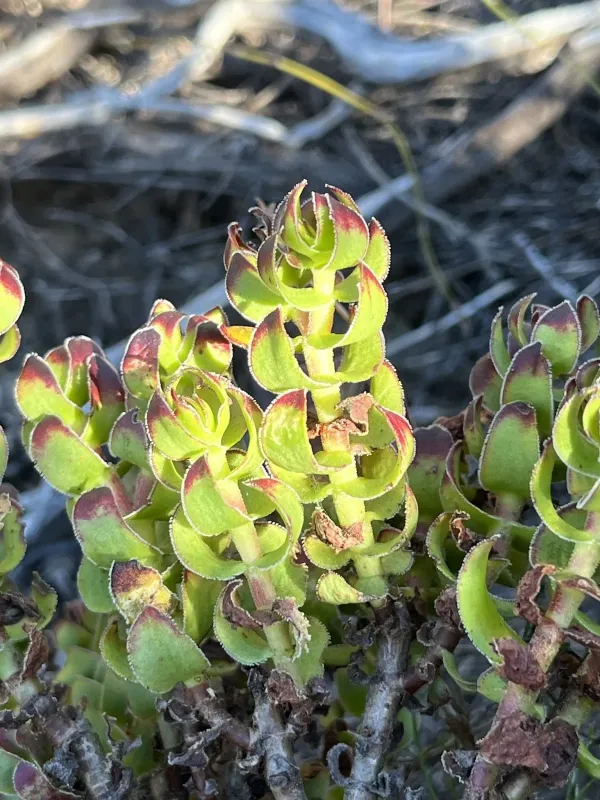
Botanically, this species is defined by its succulent, wavy-edged leaves, which often display a subtle silver hue. As the plant matures, its stems become lignified, creating a beautiful shrub-like structure that is highly valued in ornamental horticulture.
The successful cultivation of Crassula undulata requires a well-draining substrate, typically a mixture of coarse sand, perlite, and a small amount of organic compost. The soil pH should remain slightly acidic to neutral to ensure optimal nutrient uptake.
Environmental conditions must mimic its natural habitat to prevent stress. The plant performs best in bright, indirect sunlight, though it can tolerate limited exposure to direct morning sun to intensify the reddish coloration on the leaf margins.
Temperature management is critical during the annual cycle. Maintain temperatures between 20°C and 25°C during the active growing season. During winter, a cooler resting period of 12°C to 15°C is essential for maintaining the plant’s vigor and promoting health.
Main diseases and pests
The primary agricultural threat to this crop is root rot caused by overwatering or poor drainage. Excess moisture in the root zone leads to rapid decay of the vascular system, often resulting in total plant loss if not detected early.
Mealybugs are the most common pests affecting Crassula undulata. These insects settle in the leaf axils and suck plant sap, leading to stunted growth and the spread of sooty mold as a secondary consequence of their sugary secretions.
Spider mites represent a significant risk in low-humidity environments, such as heated indoor spaces. These tiny arachnids pierce the leaf tissue, causing yellowing and a loss of visual appeal, which diminishes the economic value of the plant.
Improper airflow and high humidity can trigger fungal infections, particularly powdery mildew on the leaf surfaces. Good ventilation is crucial to maintain a healthy canopy and prevent the proliferation of pathogenic spores.
Integrated pest management, including regular inspection and the use of targeted horticultural oils or systemic insecticides, remains the most effective strategy for preserving plant health in both professional nurseries and home collections.