
Crassula umbella
Crassula umbella
Description
Growing requirements
Crassula umbella is a fascinating succulent species belonging to the family Crassulaceae. Native to the rocky terrains of South Africa, this plant has evolved unique survival mechanisms to thrive in arid environments with very little moisture.
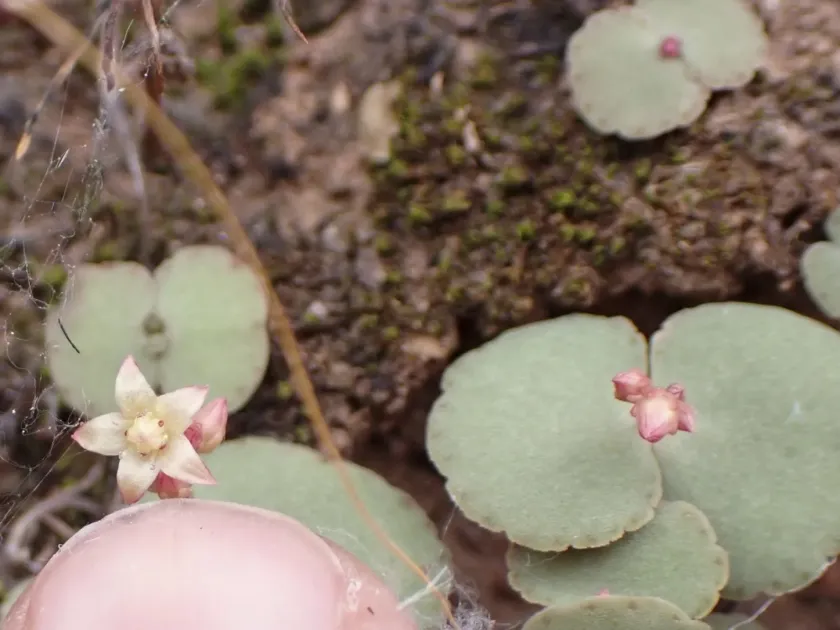
The primary botanical feature of this species is its peculiar leaf arrangement. Two orbicular leaves fuse together at the base, forming a cup-like structure from which the flowering stalk emerges, making it a highly desirable specimen for plant enthusiasts.
Regarding cultivation requirements, this plant demands high levels of light to maintain its compact morphology. Ideally, it should be kept in a bright location with plenty of indirect sunlight; intense midday sun, however, can scorch the foliage.
The substrate must be exceptionally well-draining. A mix consisting of mineral components, such as pumice, perlite, and coarse sand, with a minimal amount of organic matter is essential to prevent water accumulation near the root system.
Temperature management is key to the health of Crassula umbella. During the active growing season, standard room temperatures are sufficient, while a cool dormancy period during winter is crucial to stimulate the natural life cycle of the plant.
Main diseases and pests
The most significant threat to Crassula umbella is root rot, which is almost always a result of improper watering practices. Excess moisture trapped in the soil prevents oxygen from reaching the roots, leading to rapid decay.
Mealybugs are the most common pests affecting this plant. They often seek shelter within the crevices where the leaves fuse together, making it difficult for growers to spot an infestation before it becomes severe.
Spider mites can also be problematic, especially in environments where humidity is kept very low and air circulation is insufficient. They cause stippling and discolouration of the leaves, eventually stunting the plant's growth.
Fungal pathogens may take advantage of damaged or damp leaf tissue. Keeping the leaves dry and ensuring good airflow around the plant is the best preventive measure against the development of molds and rot.
Chemical treatments should be used with extreme caution. Because Crassula umbella is sensitive to many pesticides, it is often safer to manually remove pests using a soft brush dipped in isopropyl alcohol.