
Mossy stonecrop
Crassula tillaea
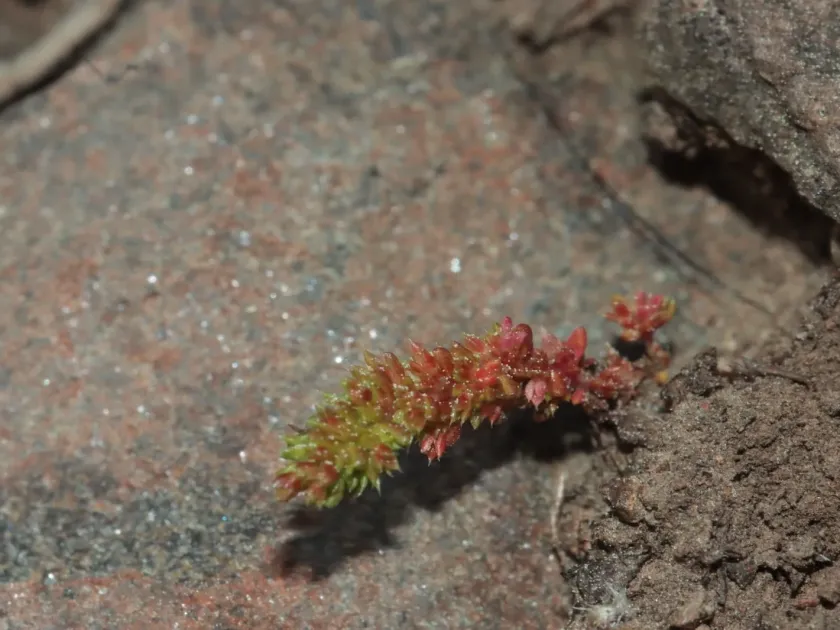
Description
Growing requirements
Mossy stonecrop is a diminutive annual herbaceous plant belonging to the Crassulaceae family. In an agricultural context, this species is typically identified as a weed, often colonizing open, disturbed soil areas where competition from taller vegetation is minimal.
The native range of the species encompasses the Mediterranean region and Western Europe. However, due to its adaptability, it has spread to various other regions with Mediterranean-type climates, often thriving in sandy, dry, and well-drained soils found along roadsides or wasteland.
Botanically, it is a tiny succulent that rarely exceeds 5 centimeters in height. Its structure features small, opposite leaves and inconspicuous pinkish-white flowers. Its succulent nature allows it to store water effectively, providing an evolutionary advantage in habitats prone to seasonal drought.
The environmental requirements include high light intensity and stable, moderate temperatures during the growing period. The species is highly intolerant of shade and excessive soil moisture, which can lead to decay and competition from more vigorous, non-succulent plant species.
In modern agriculture, mossy stonecrop is not utilized as a commercial crop. Its primary significance lies in its role as a botanical indicator; it can reveal specific soil moisture levels or nutrient deficiencies that are relevant to field management practices.
Main diseases and pests
The primary threats to the survival of mossy stonecrop in cultivated environments include fungal pathogens that thrive in high humidity, such as various root rots. Furthermore, standard herbicide applications effectively suppress its population, as it lacks resistance to agricultural chemicals.